MANCHERIAL INSTITUTE OF MATHEMATICAL SCIENCES

MIMS Degree & P.G. College, Mancherial,Telangana.
Affiliated to Kakatiya University, Warangal, Telangana.
Mancherial, Telangana, India - 504 208

Mathematics Department

Faculty: 4

Courses: 4

Activities: 13

Infrastructure: 0

SUDHA RANI

Lecturer in Mathematics

MSc BEd

OLLALA ODELU

Lecturer

sammaiah Thatipamula

Lecturer

MSc(maths),BEd.

Mr. MUPPIDI VIJAY KUMAR

Lecturer in Mathematics

M.Sc

B.Sc ( Mathematics , Statistics , Data Science ) E/M

Subject : DIFFERENTIAL EQUATIONS

Academic Year: 2026-2027

Code: 101

Category: MJR: Major Course

Semester: Sem 1

Credits: Theory : 5 | Practical : 0

Marks: Theory : 100 | Internal : 25 | Practical : 0

View PDF

B.Sc ( Mathematics , Statistics , Data Science ) E/M

Subject : DIFFERENTIAL AND VECTOR CALCULUS

Academic Year: 2026-2027

Code: 301

Category: MJR: Major Course

Semester: Sem 3

Credits: Theory : 5 | Practical : 0

Marks: Theory : 100 | Internal : 25 | Practical : 0

View PDF

B.Sc ( Mathematics , Statistics , Data Science ) E/M

Subject : LINEAR ALGEBRA

Academic Year: 2026-2027

Code: 501

Category: MJR: Major Course

Semester: Sem 5

Credits: Theory : 5 | Practical : 0

Marks: Theory : 100 | Internal : 25 | Practical : 0

View PDF

B.Sc ( Mathematics, Statistics, Computer Science) E/M

Subject : DIFFERENTIAL EQUATIONS

Academic Year: 2026-2027

Code: 101

Category: MJR: Major Course

Semester: Sem 1

Credits: Theory : 5 | Practical : 0

Marks: Theory : 100 | Internal : 25 | Practical : 0

View PDF

B.Sc ( Mathematics, Statistics, Computer Science) E/M

Subject : DIFFERENTIAL AND VECTOR CALCULUS

Academic Year: 2026-2027

Code: 301

Category: MJR: Major Course

Semester: Sem 3

Credits: Theory : 5 | Practical : 0

Marks: Theory : 100 | Internal : 25 | Practical : 0

View PDF

B.Sc ( Mathematics, Statistics, Computer Science) E/M

Subject : LINEAR ALGEBRA

Academic Year: 2026-2027

Code: 501

Category: MJR: Major Course

Semester: Sem 5

Credits: Theory : 5 | Practical : 0

Marks: Theory : 100 | Internal : 25 | Practical : 0

View PDF

B.Sc. (Mathematics, Physics, Computer Science) E/M

Subject : DIFFERENTIAL AND VECTOR CALCULUS

Academic Year: 2026-2027

Code: 301

Category: MJR: Major Course

Semester: Sem 3

Credits: Theory : 5 | Practical : 0

Marks: Theory : 100 | Internal : 25 | Practical : 0

View PDF

B.Sc. (Mathematics, Physics, Computer Science) E/M

Subject : LINEAR ALGEBRA

Academic Year: 2026-2027

Code: 501

Category: MJR: Major Course

Semester: Sem 5

Credits: Theory : 5 | Practical : 0

Marks: Theory : 100 | Internal : 25 | Practical : 0

View PDF

Student Centric Learning (SCL)

Best Practices (Criterion 7)

Other Activities

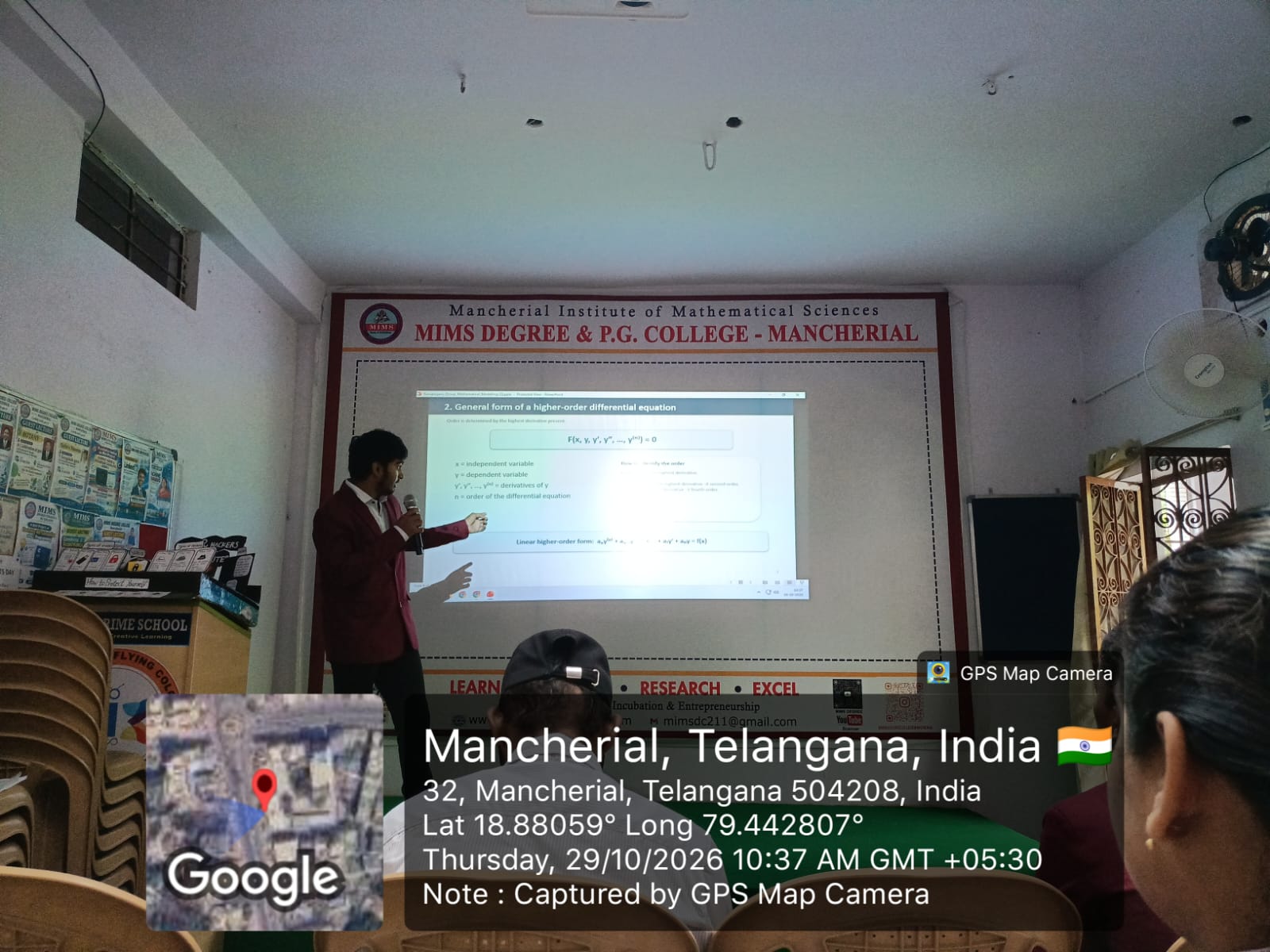
Mathematics Students Seminar on Implicit functions

📅 2026-10-29

  • A structured seminar presentation and discussion focusing on implicit functions and their analytical significance
  • The session covers core concepts, including how to differentiate equations containing both x and y terms simultaneously using the chain rule
  • Participants will examine why implicit functions are crucial for analyzing complex curves, surfaces, and systems where explicit isolation of variables is mathematically impractical or impossible

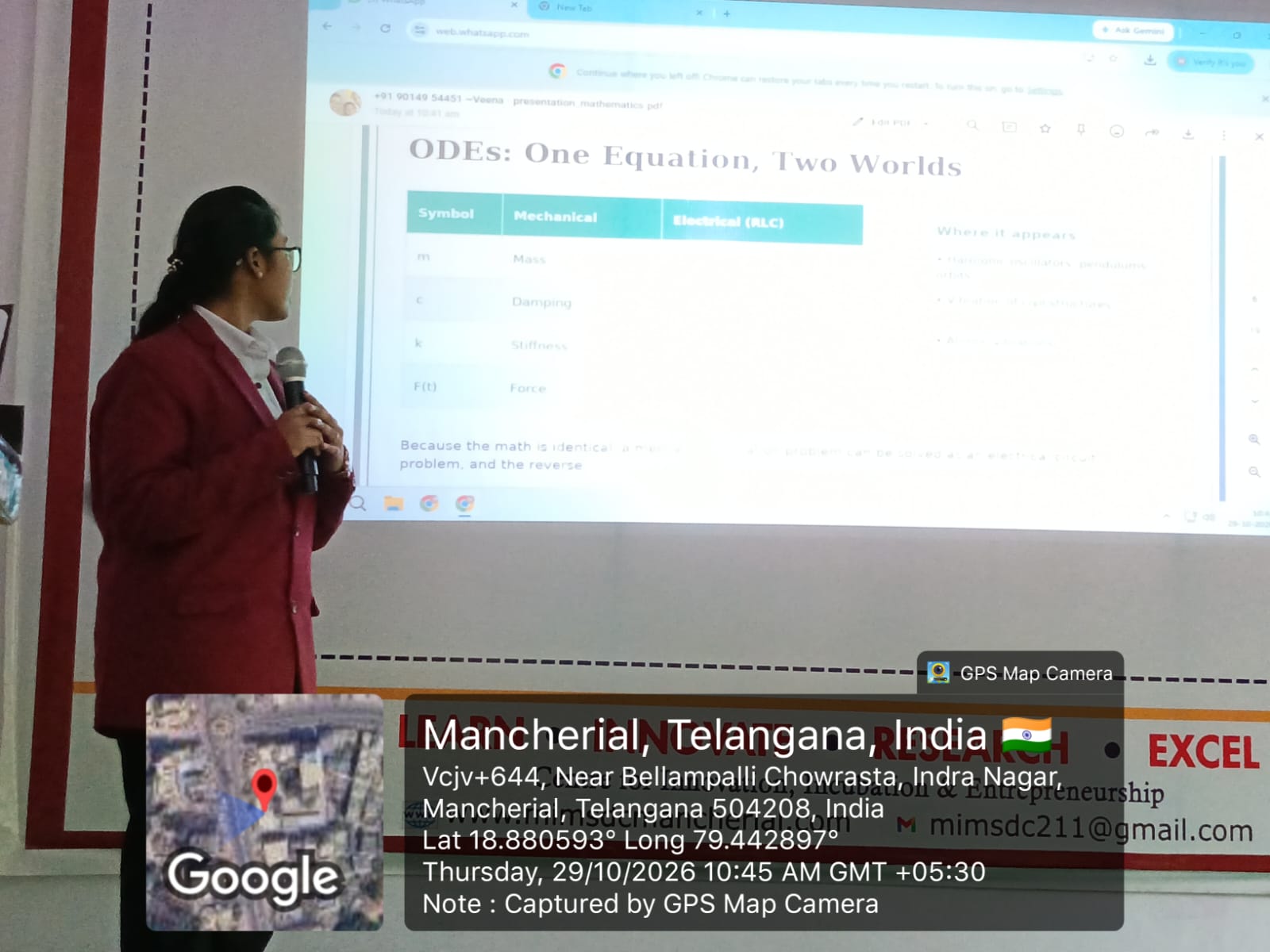
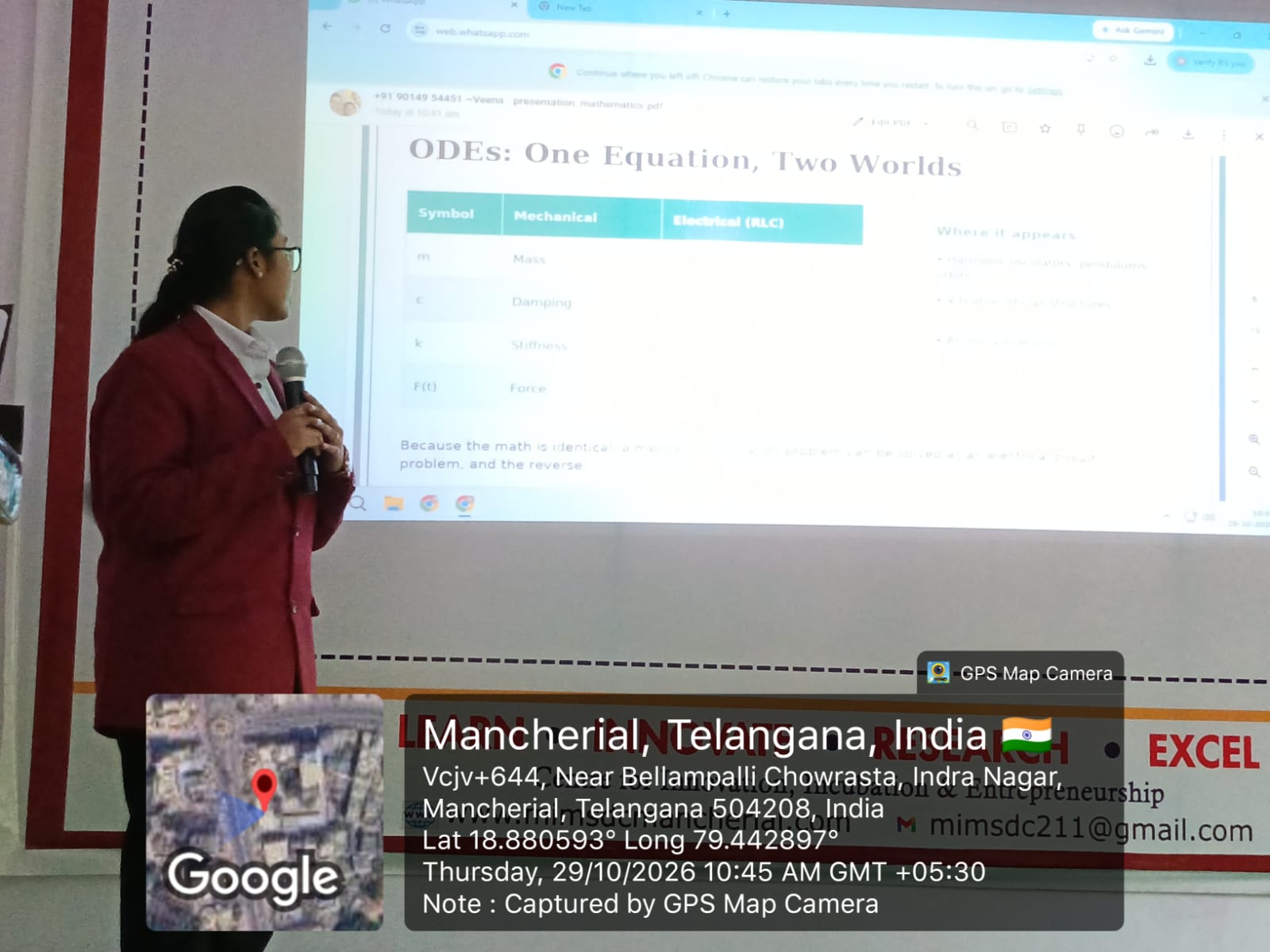
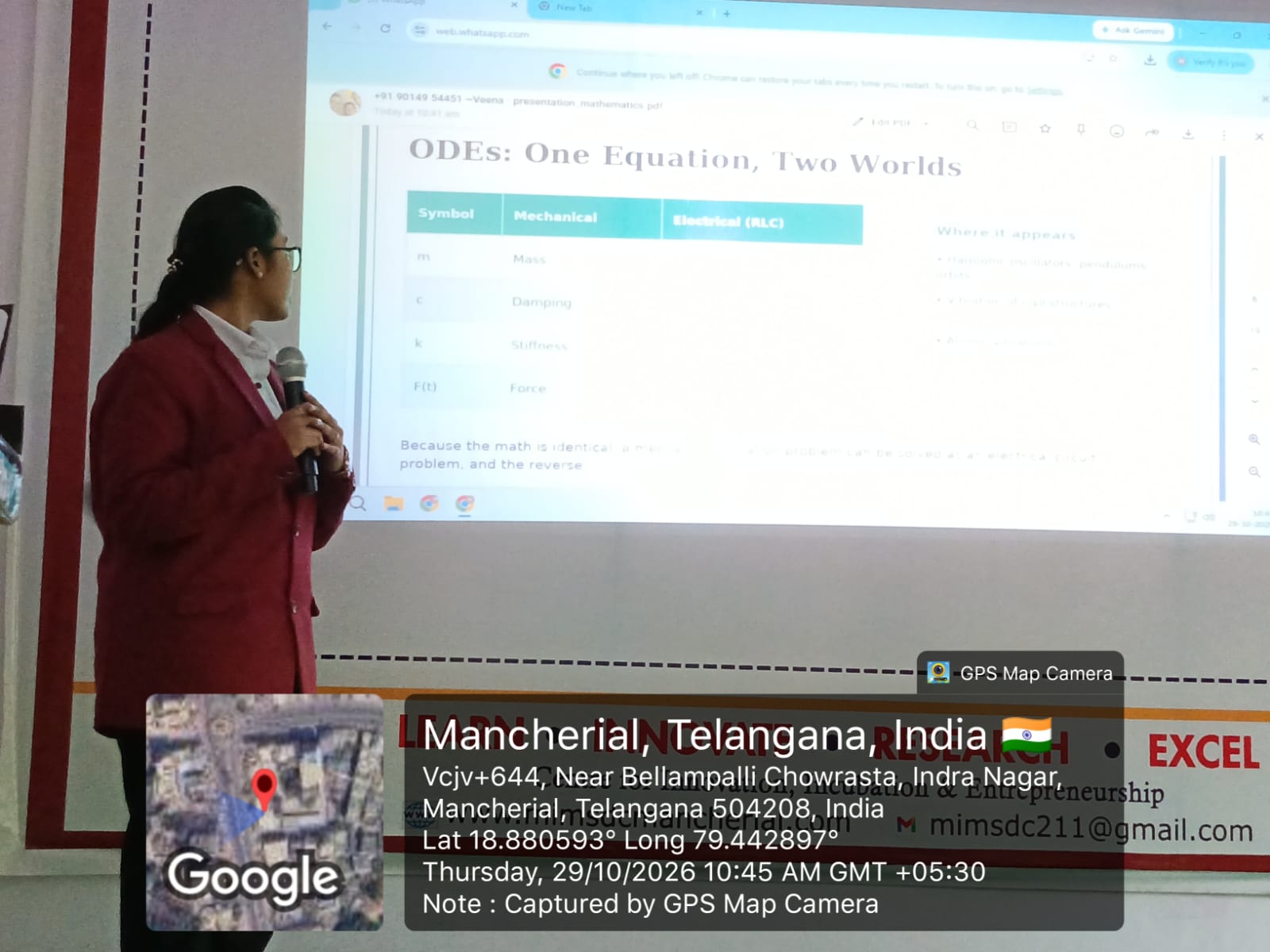
Mathematics Students Project Presentation on Application in Physics and Engineering

📅 2026-10-29

  • A comprehensive project presentation focusing on the practical applications of advanced mathematics in physics and engineering
  • Participants will showcase projects modeling dynamic physical phenomena—such as motion kinematics, fluid dynamics, electrical circuits, or structural stress analysis—demonstrating how theoretical equations translate into reliable engineering designs and technological solutions

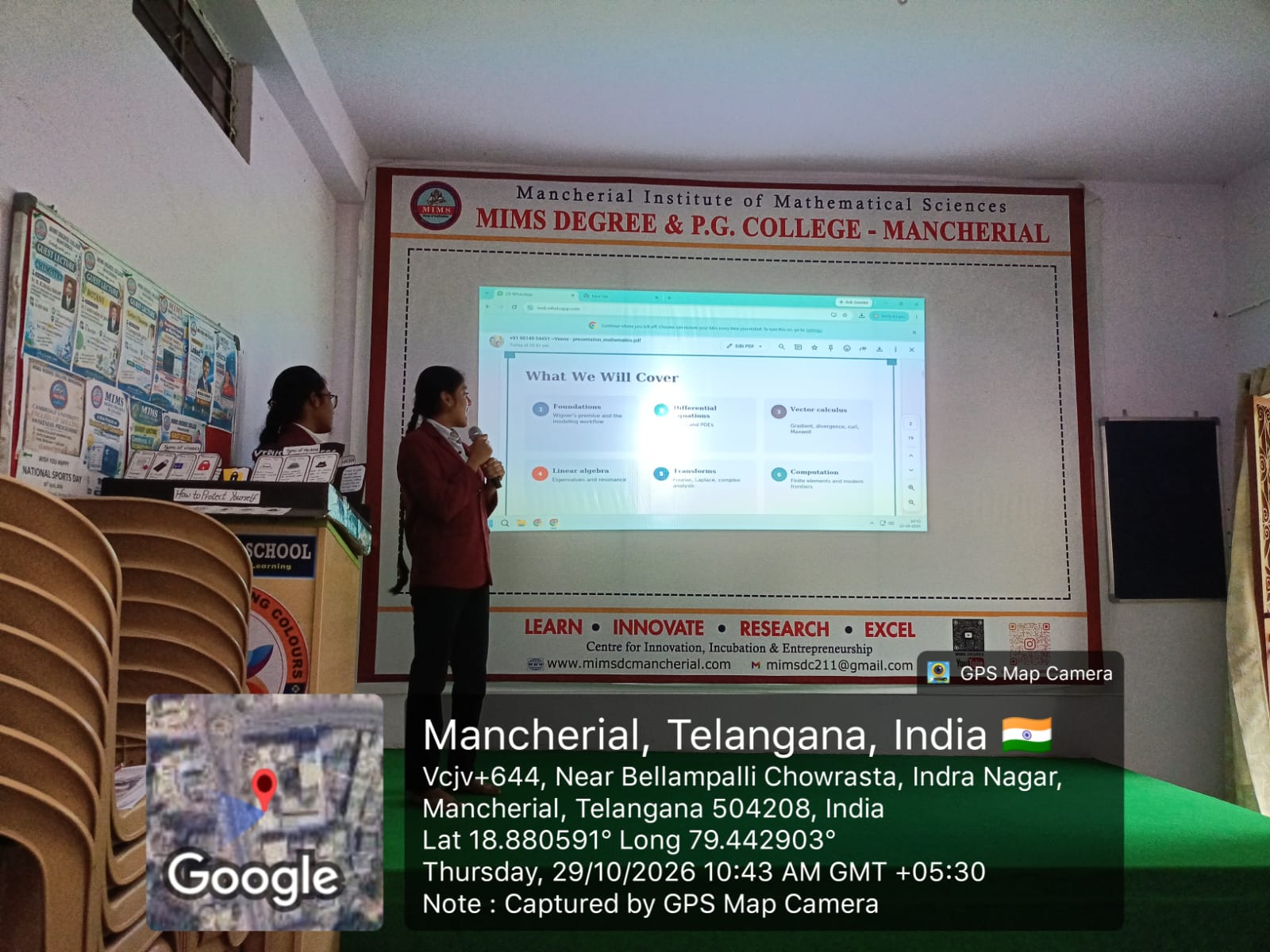
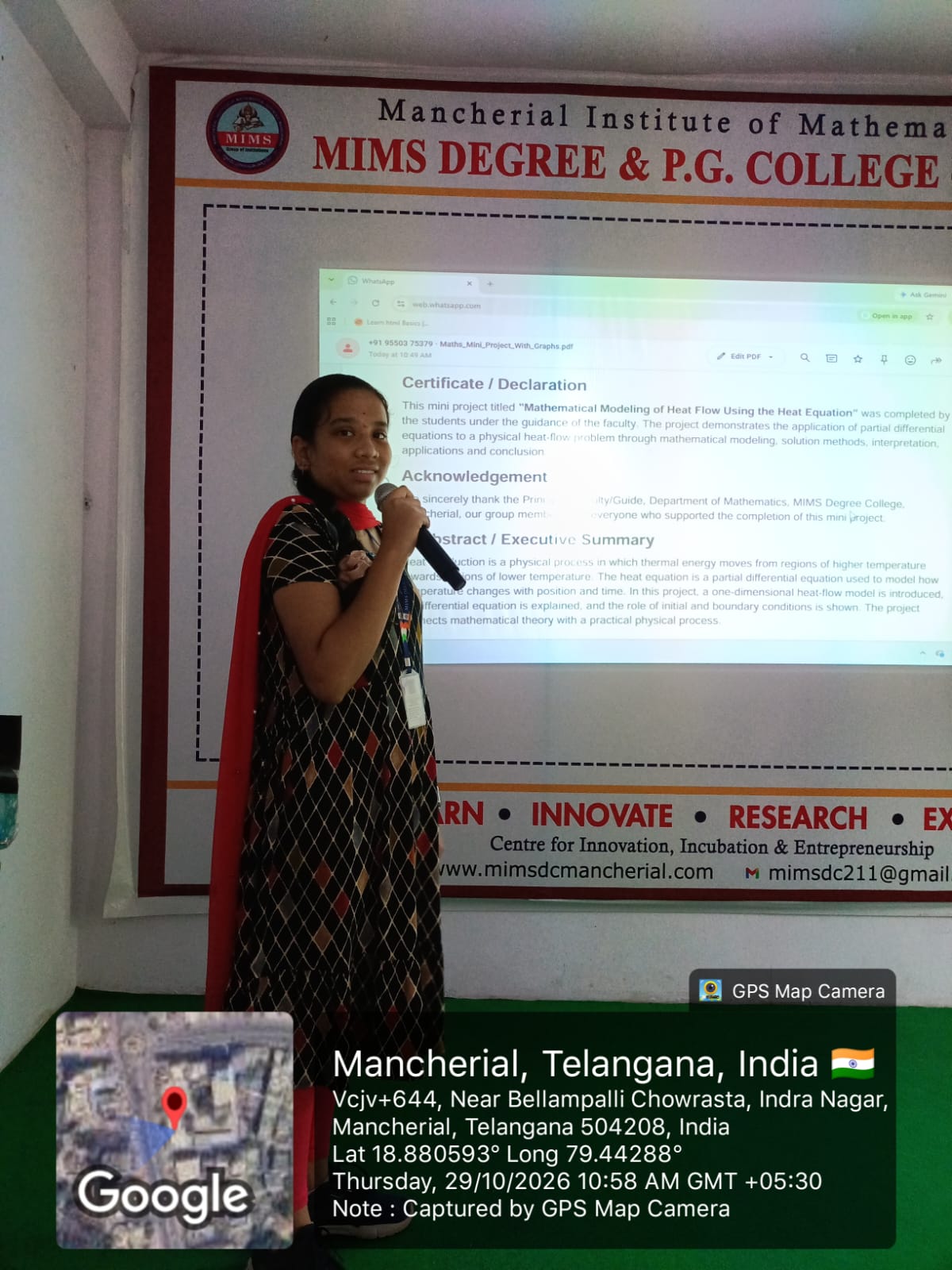
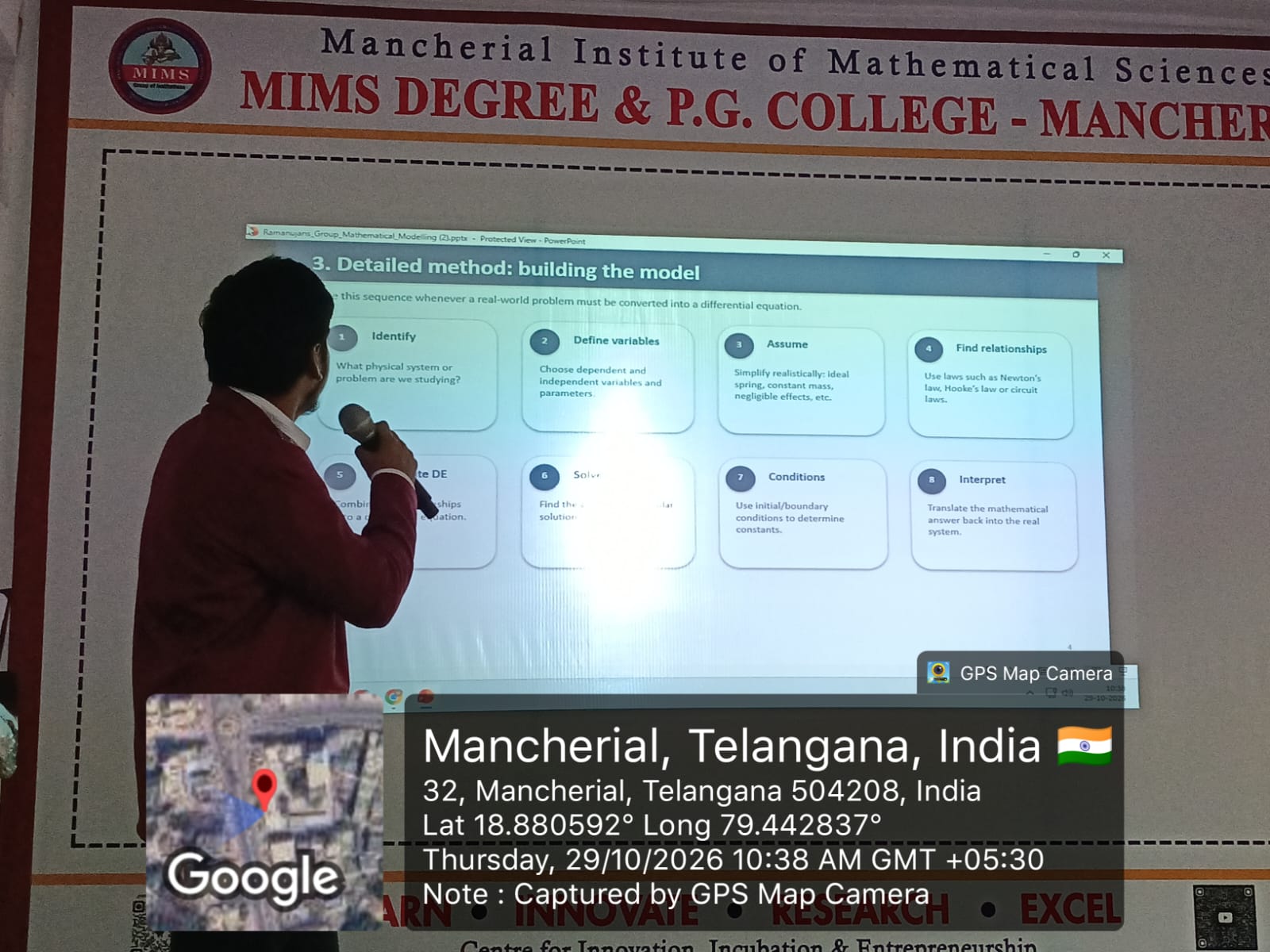
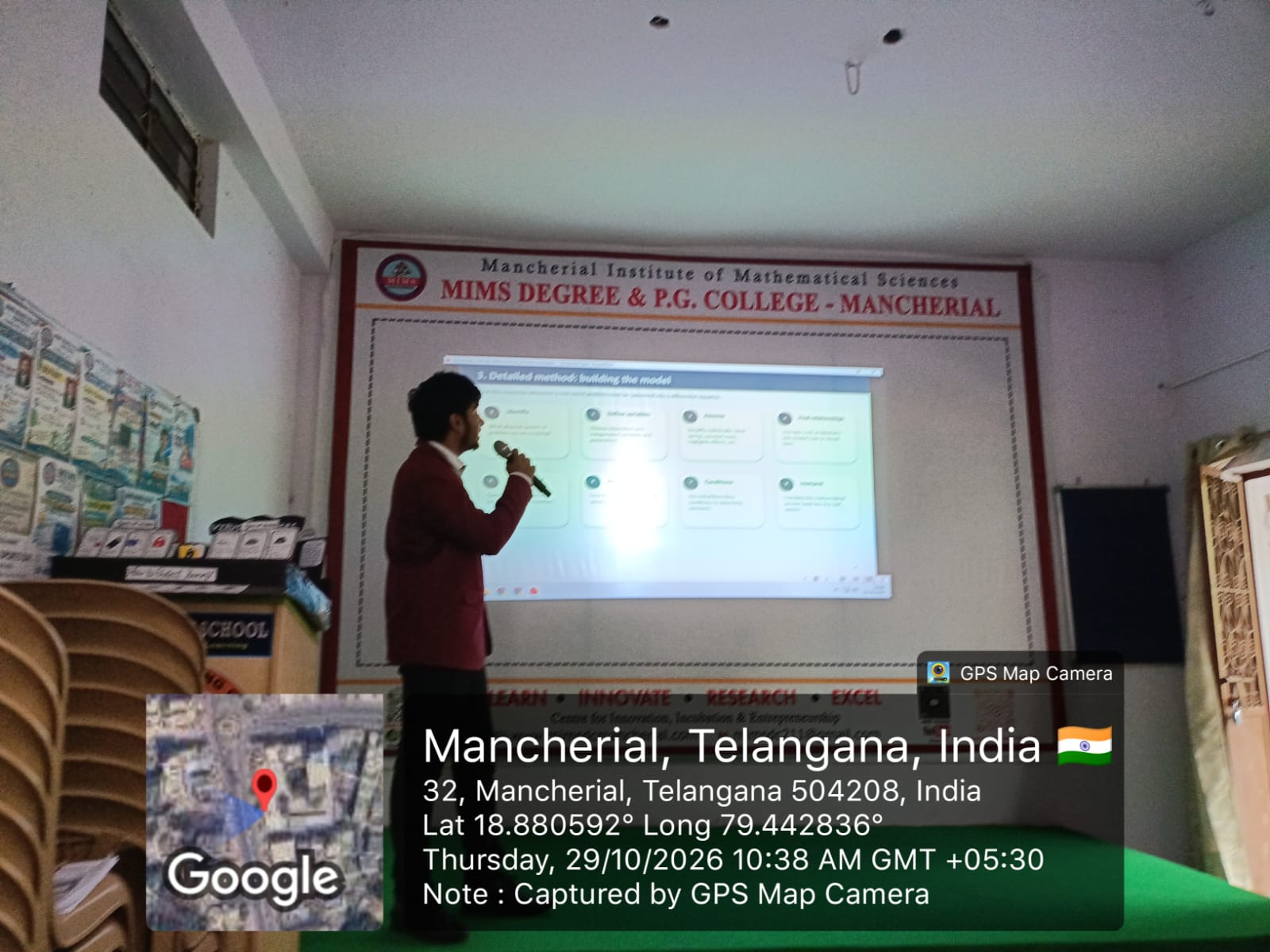
Students Project Presentation on Mathematical modelling

📅 2026-10-29

  • Mathematical modelling is the process of translating real-world scenarios, systems, or physical phenomena into mathematical language and structures (such as equations, graphs, or algorithms)
  • By abstracting complex systems into mathematical frameworks, we can analyze their behavior, make predictions, test hypotheses, and optimize outcomes without having to experiment in the physical world
  • ​The typical life cycle of a mathematical model involves: ​Formulation: Translating a real-world problem into mathematical terms
  • ​Solution: Solving the mathematical problem using analytical or computational tools
  • ​Interpretation: Translating the mathematical results back into practical, real-world insights
  • ​Validation: Comparing model predictions with real-world data to refine and improve accuracy

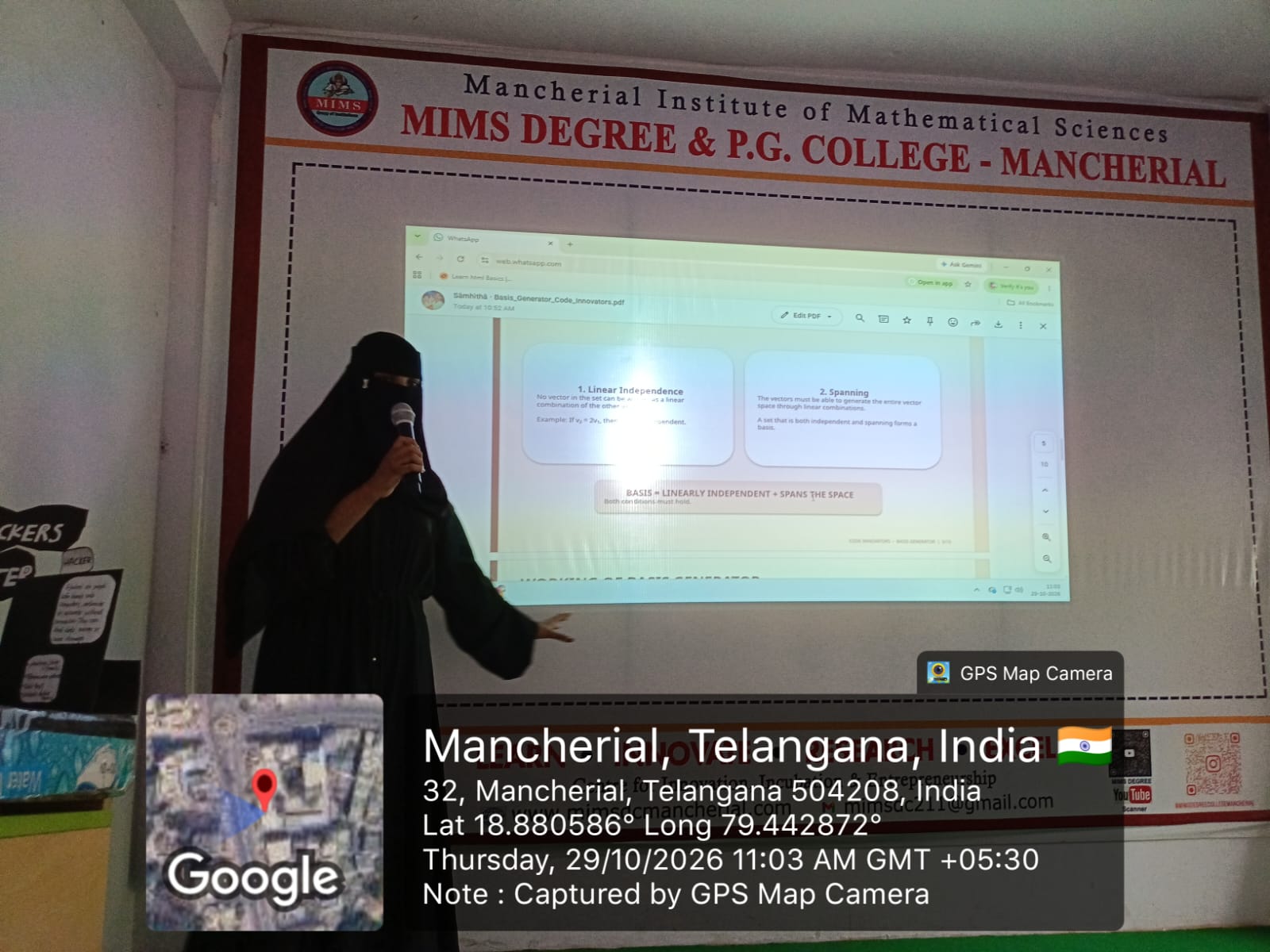
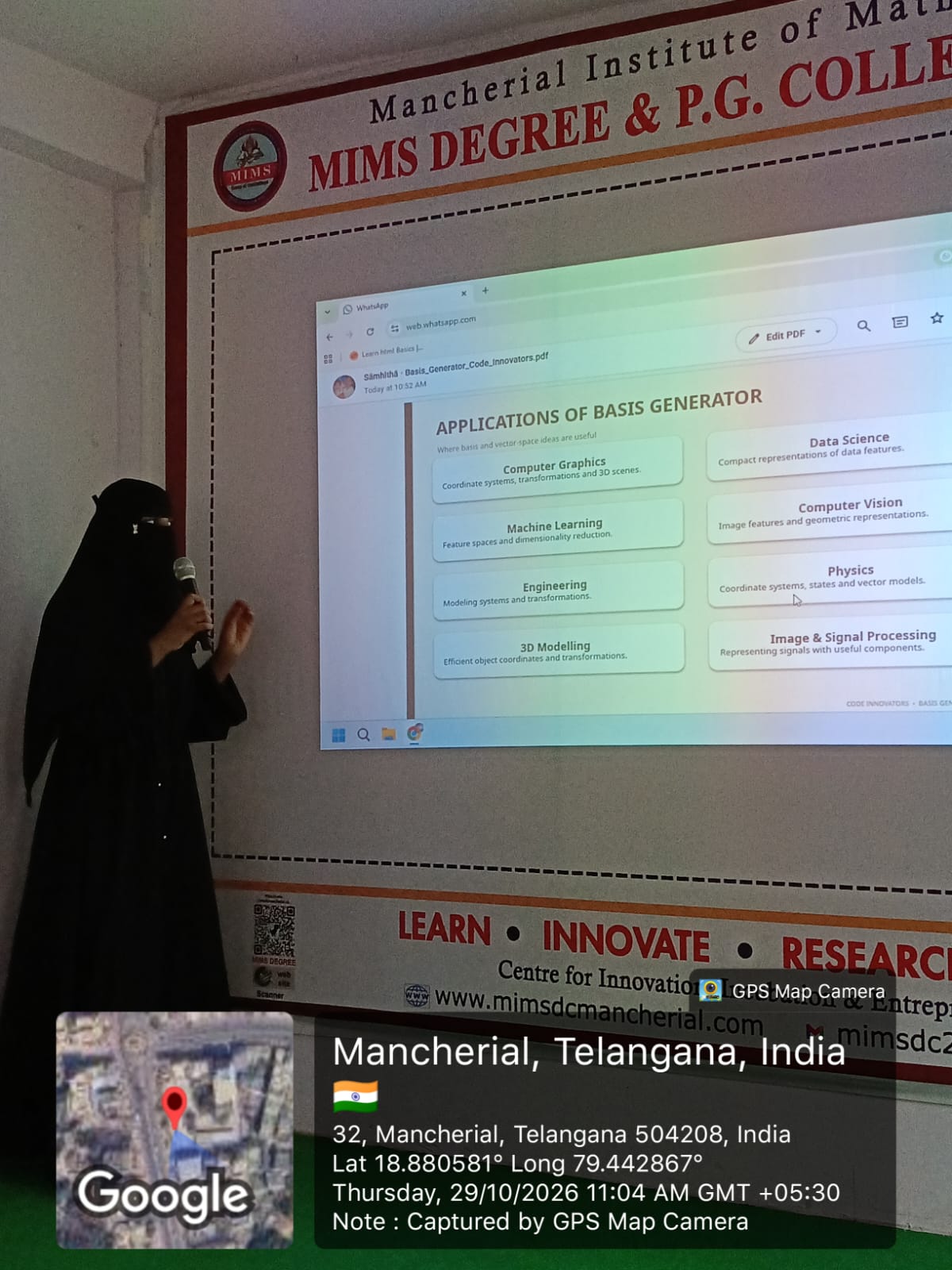
Students project Presentation on Basis Generator

📅 2026-10-29

  • Conceptual Definition: A basis generator is a computational or mathematical mechanism that sifts through a spanning set to isolate a basis—a set of vectors that are both linearly independent and capable of spanning the entire target space
  • ​Algorithmic Workflow: Typically implemented using matrix factorization techniques (such as Gaussian elimination/Row Reduction, Gram-Schmidt orthogonalization, or Singular Value Decomposition), the system tests candidate vectors sequentially or simultaneously to discard dependent duplicates
  • ​Project Implementation: In a project context, this involves writing a script or application (e
  • g
  • , in Python or MATLAB) that inputs a matrix of column/row vectors, processes them through linear algebra libraries, and outputs the canonical basis vectors alongside the space's exact dimension

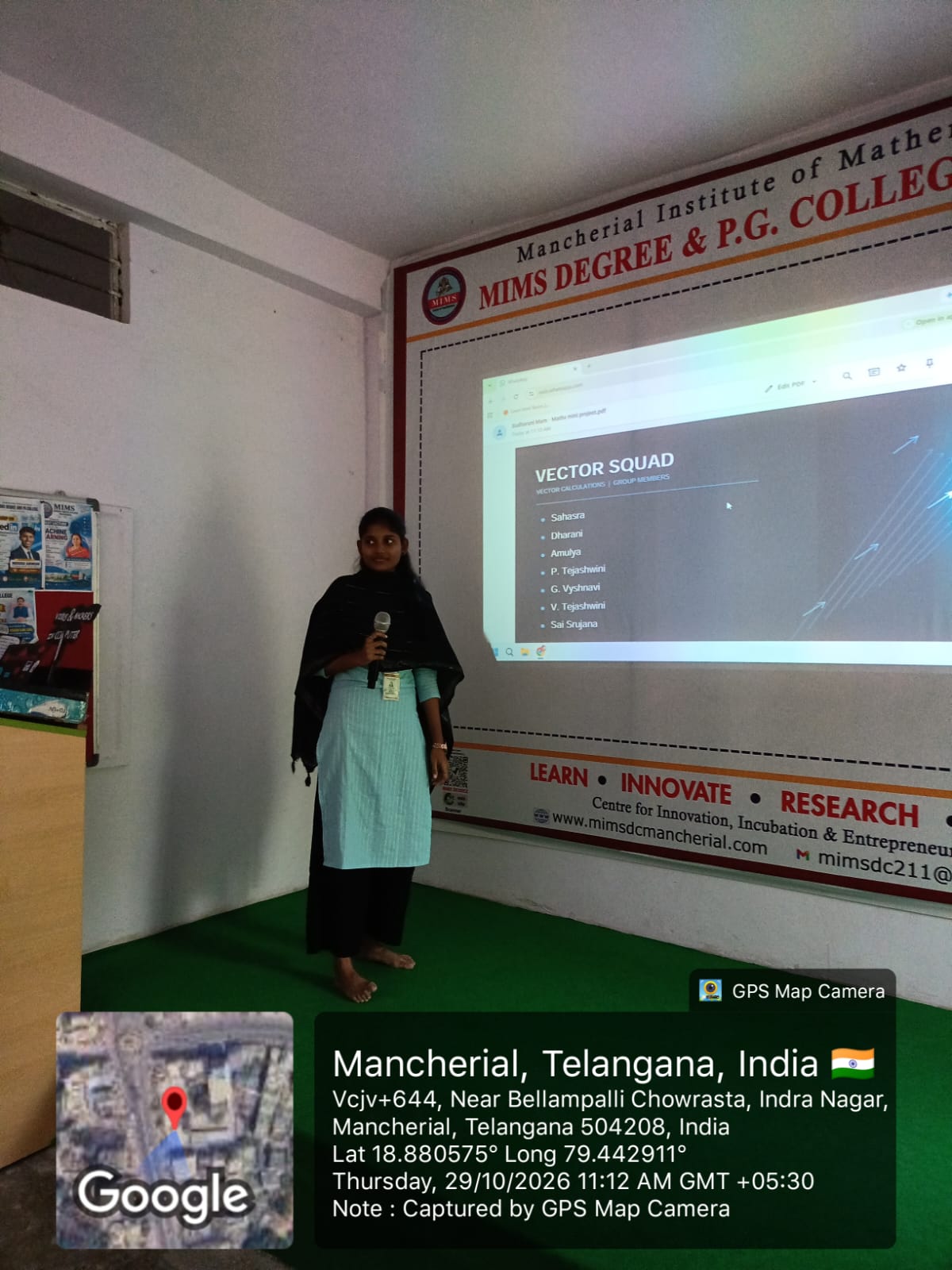
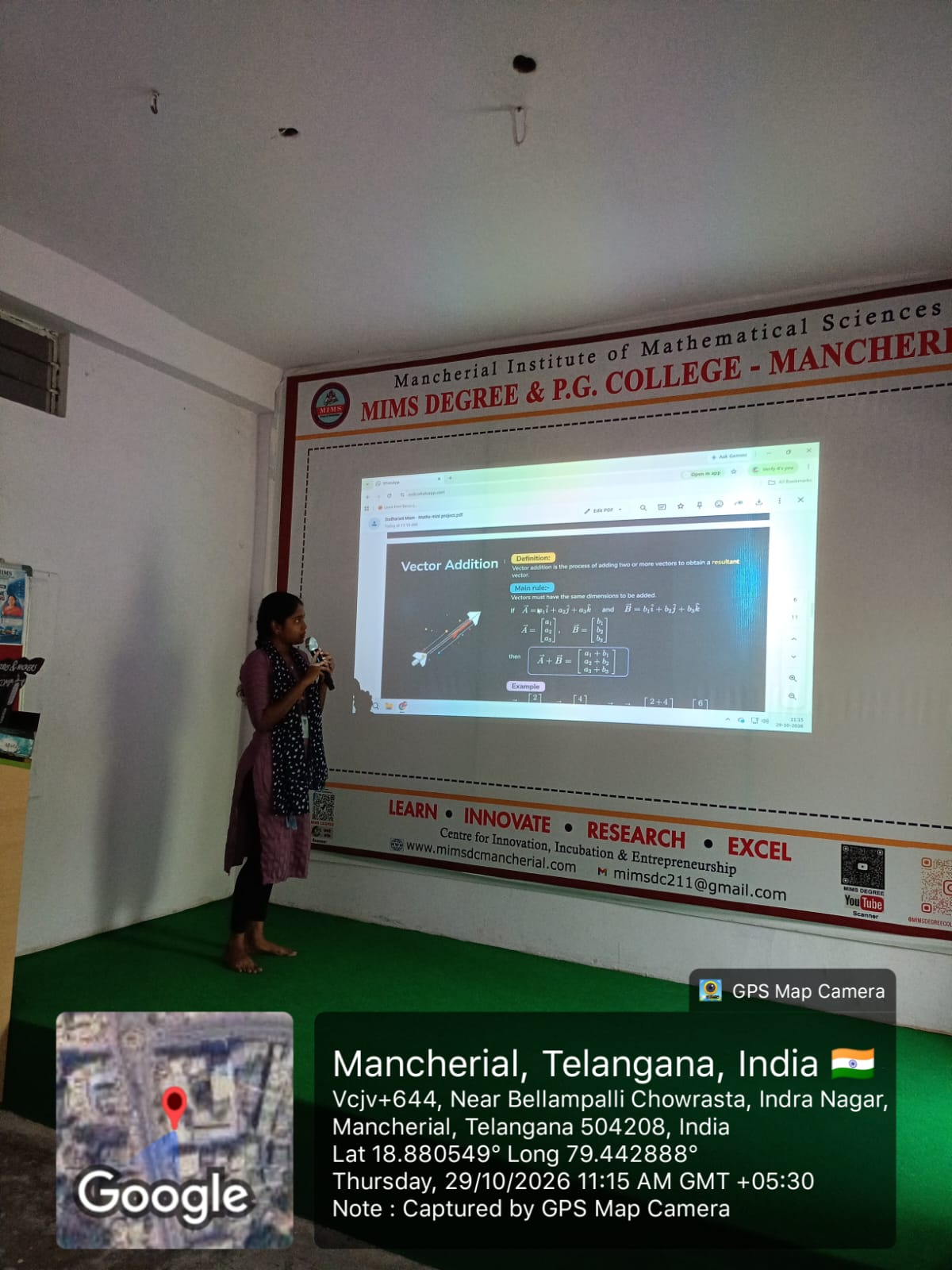
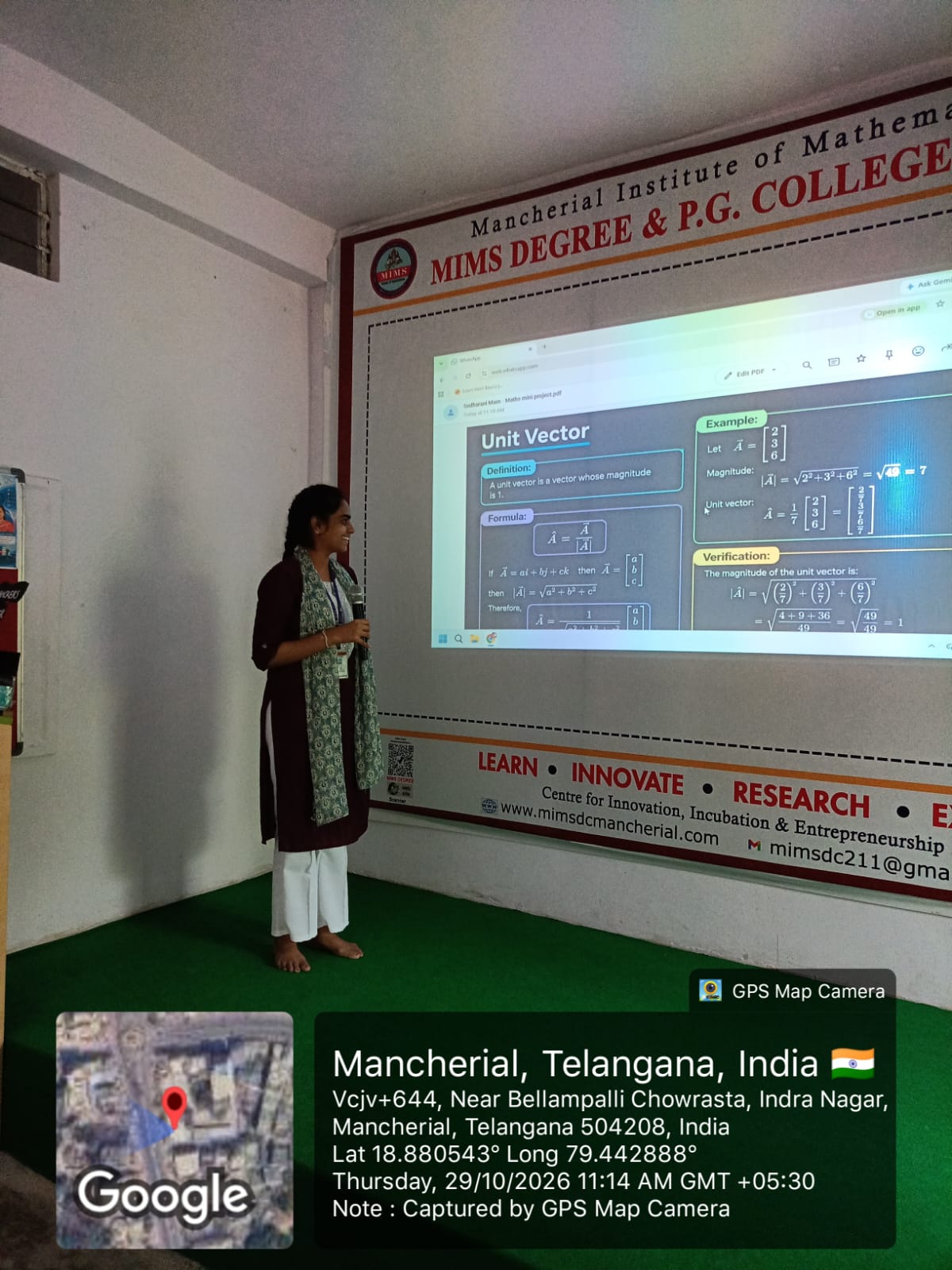
Students Project Presentation on vector calculation

📅 2026-10-29

  • Mathematical Formulation: It translates physical directional attributes and spatial dimensions into numerical vectors and magnitude equations
  • ​Algorithmic Processing: It employs automated computational routines to rapidly compute angles, vector projections, and cross products
  • ​Output & Validation: It delivers precise geometric insights, validating simulated directional data against real-world mechanical behaviors

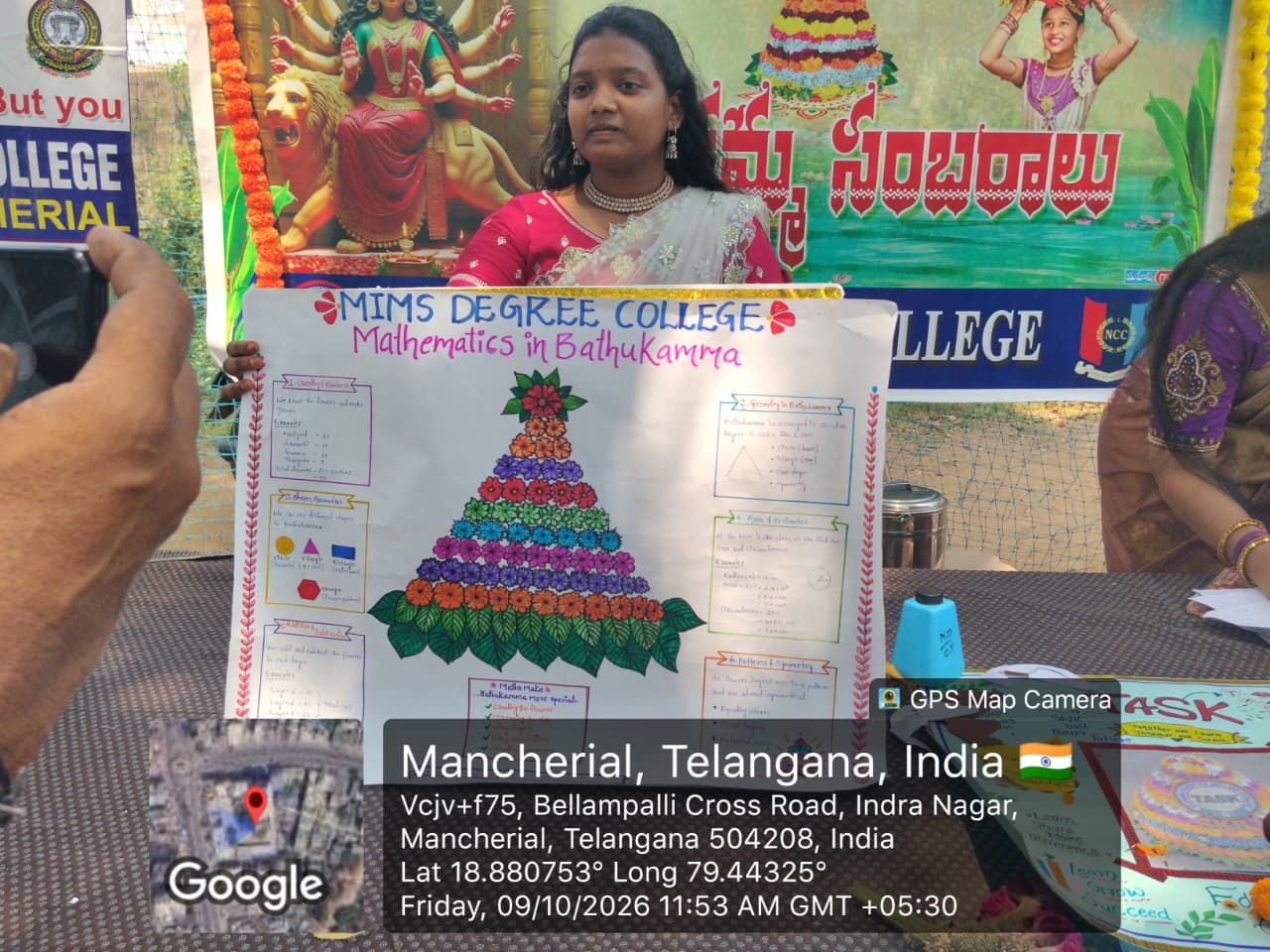
Mathematics Behind Bathakamm Ustav

📅 2026-10-09

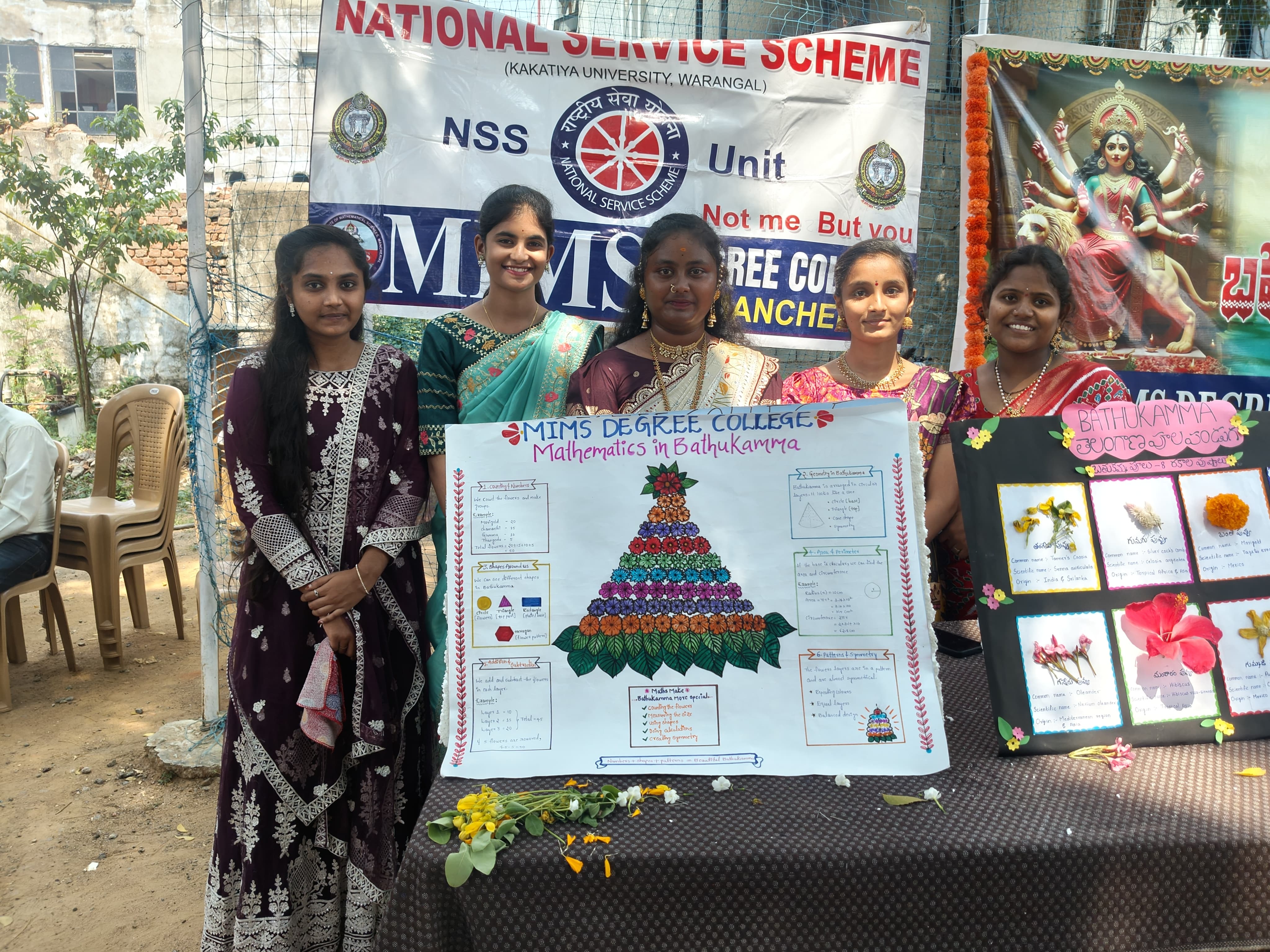
  • Geometric Structures & 3D Shapes: The Bathukamma is meticulously built into a conical or pyramidal stack resembling a temple tower (Gopuram)
  • It features multiple concentric circular layers where the radius and circumference progressively decrease from the base to the top, resembling a geometric sequence or decreasing progression
  • Symmetry and Patterns: Flowers (such as Tangedu, Gunuka, Banti, etc
  • ) are arranged in alternating color bands, showcasing both rotational and reflective symmetry as well as tessellation patterns
  • Spatial Balancing & Physics: Constructing a stable, vertical floral tower requires an understanding of center-of-mass, structural load distribution, and gravitational stability
  • Arithmetic and Measurement: Students can measure parameters like height, base radius, and approximate volume of the floral stack, alongside counting flower ratios per layer

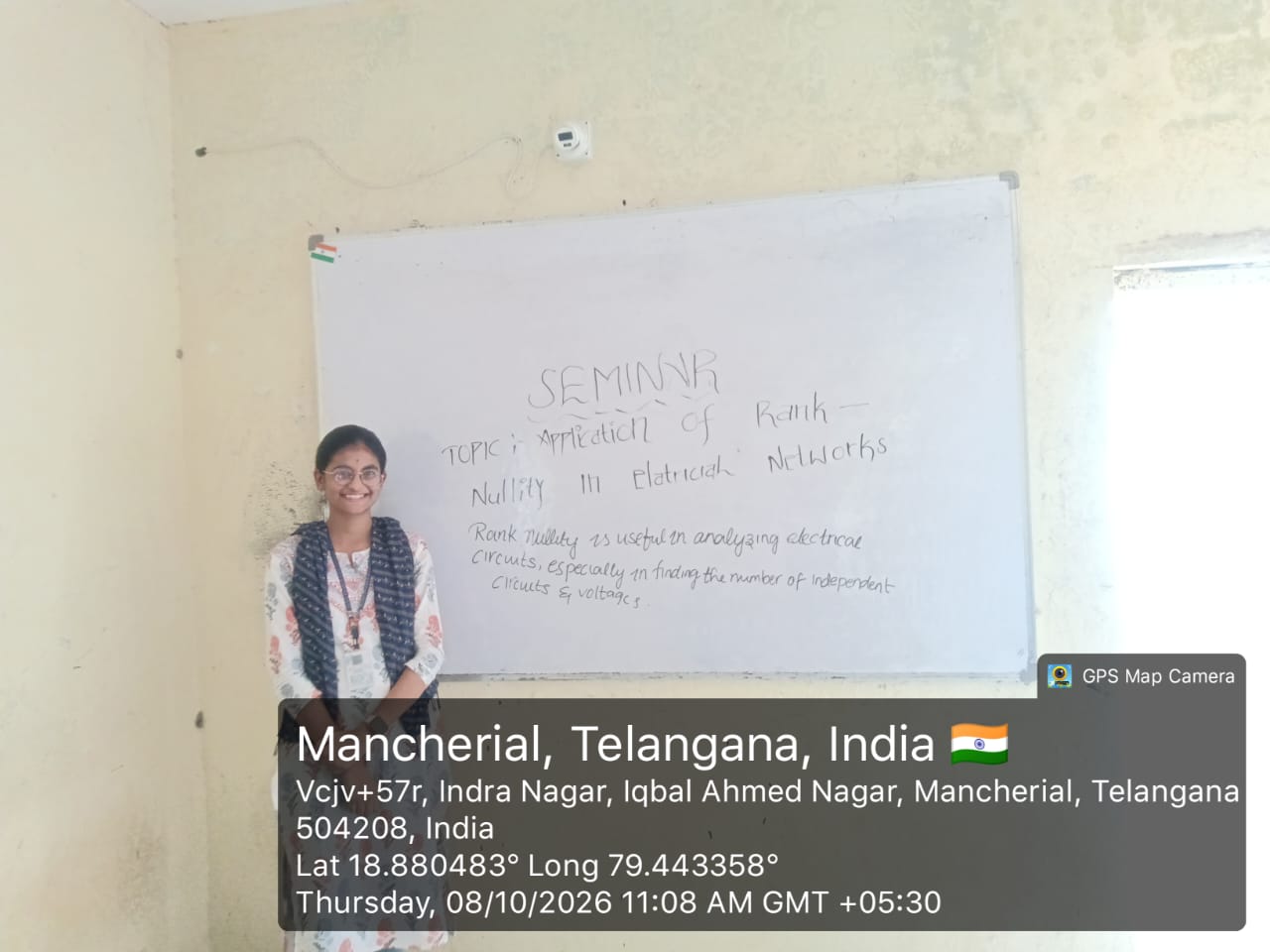
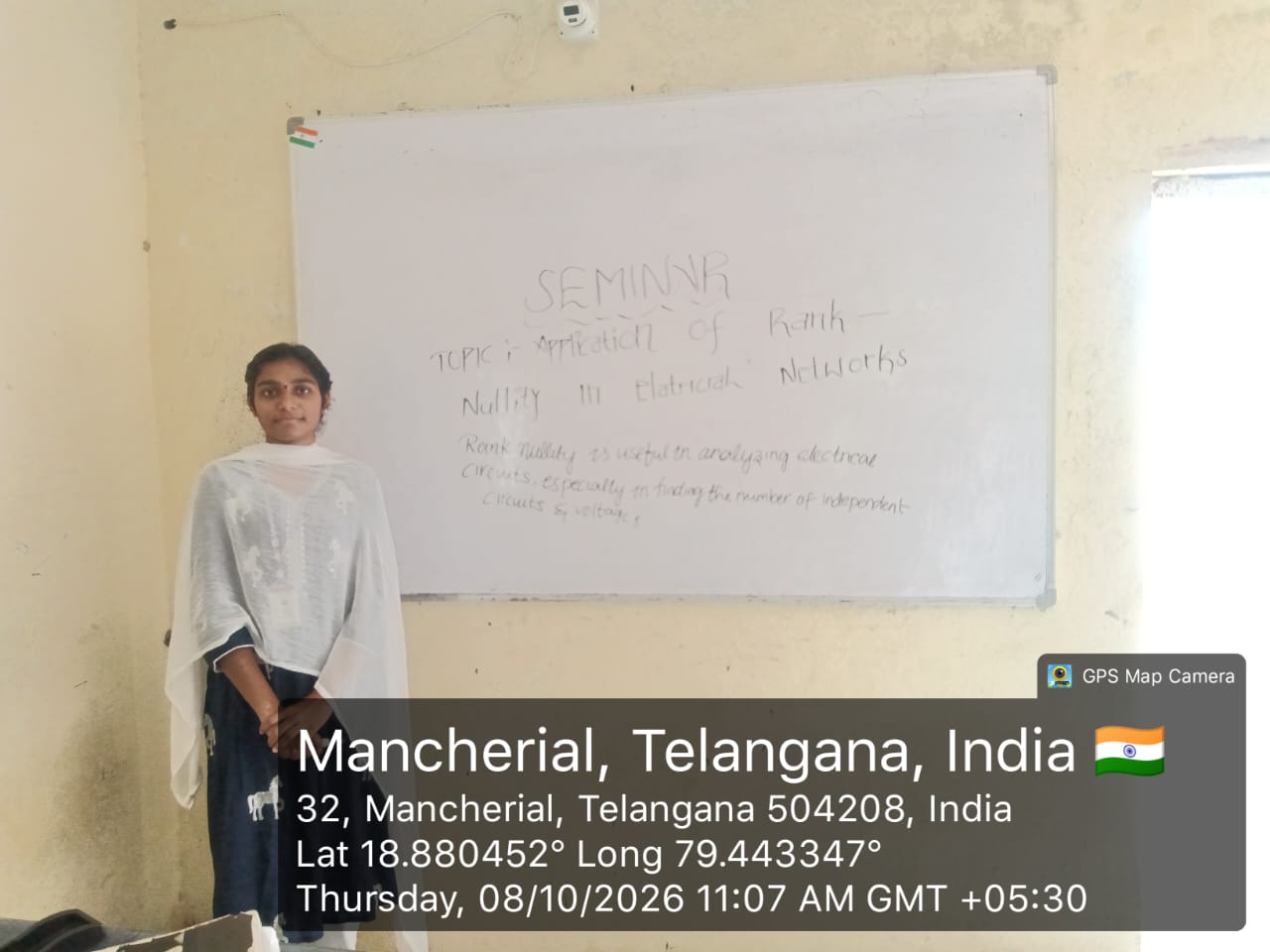
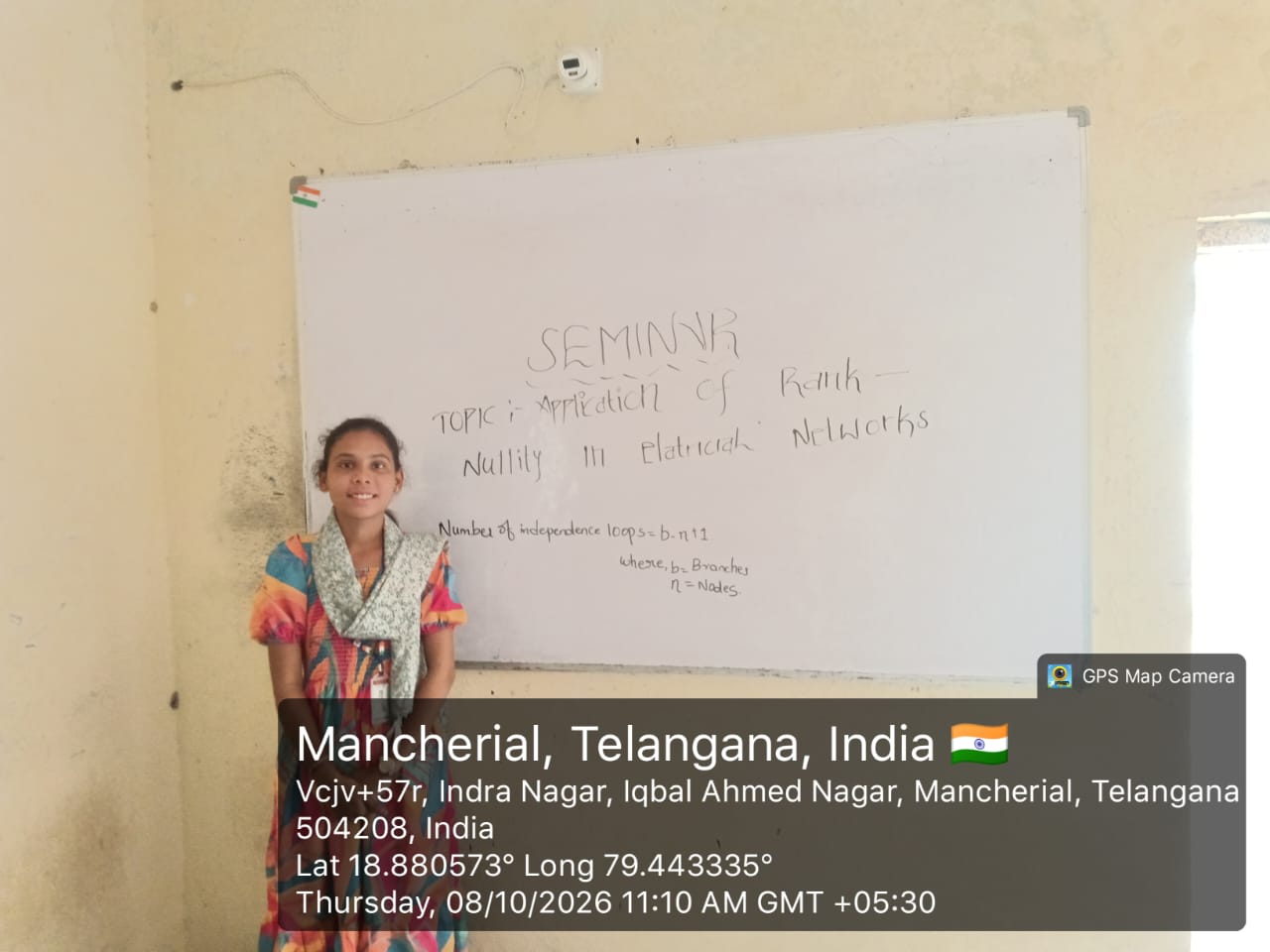
Mathematics Students Seminar on Application of Rank nullity theorem in electrical networks

📅 2026-10-08

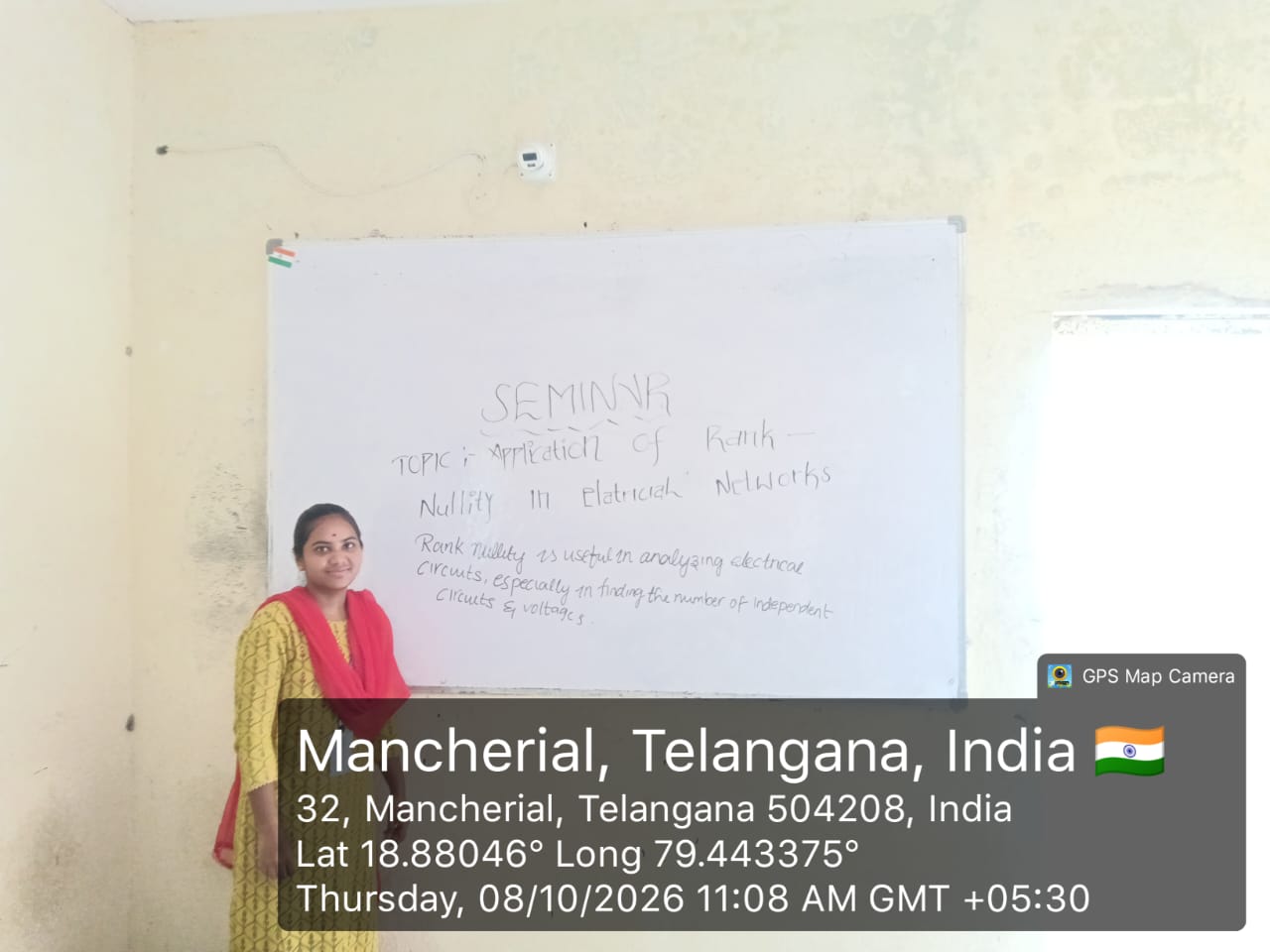
  • seminar was conducted on the topic “Application of Rank–Nullity Theorem in Electrical Networks” to explain the practical applications of linear algebra in electrical engineering
  • The seminar discussed the representation of electrical networks using matrices, Kirchhoff’s Current Law (KCL), Kirchhoff’s Voltage Law (KVL), and systems of linear equations
  • The Rank–Nullity Theorem was applied to understand the relationship between independent equations, unknown currents, and possible solutions in electrical network analysis
  • Students gained knowledge of the connection

Mathematics Students Group discussion on importance of calculus

📅 2026-09-28

  • A collaborative group discussion focusing on why calculus is vital to modern science, technology, and problem-solving
  • Participants will explore how differential calculus helps analyze rates of change (such as velocity, acceleration, and optimization) and how integral calculus measures accumulation (such as total distance, area under curves, and work done)
  • The session covers practical implementations—from designing safe structures and launching rockets to financial forecasting and training machine learning algorithms in computer science

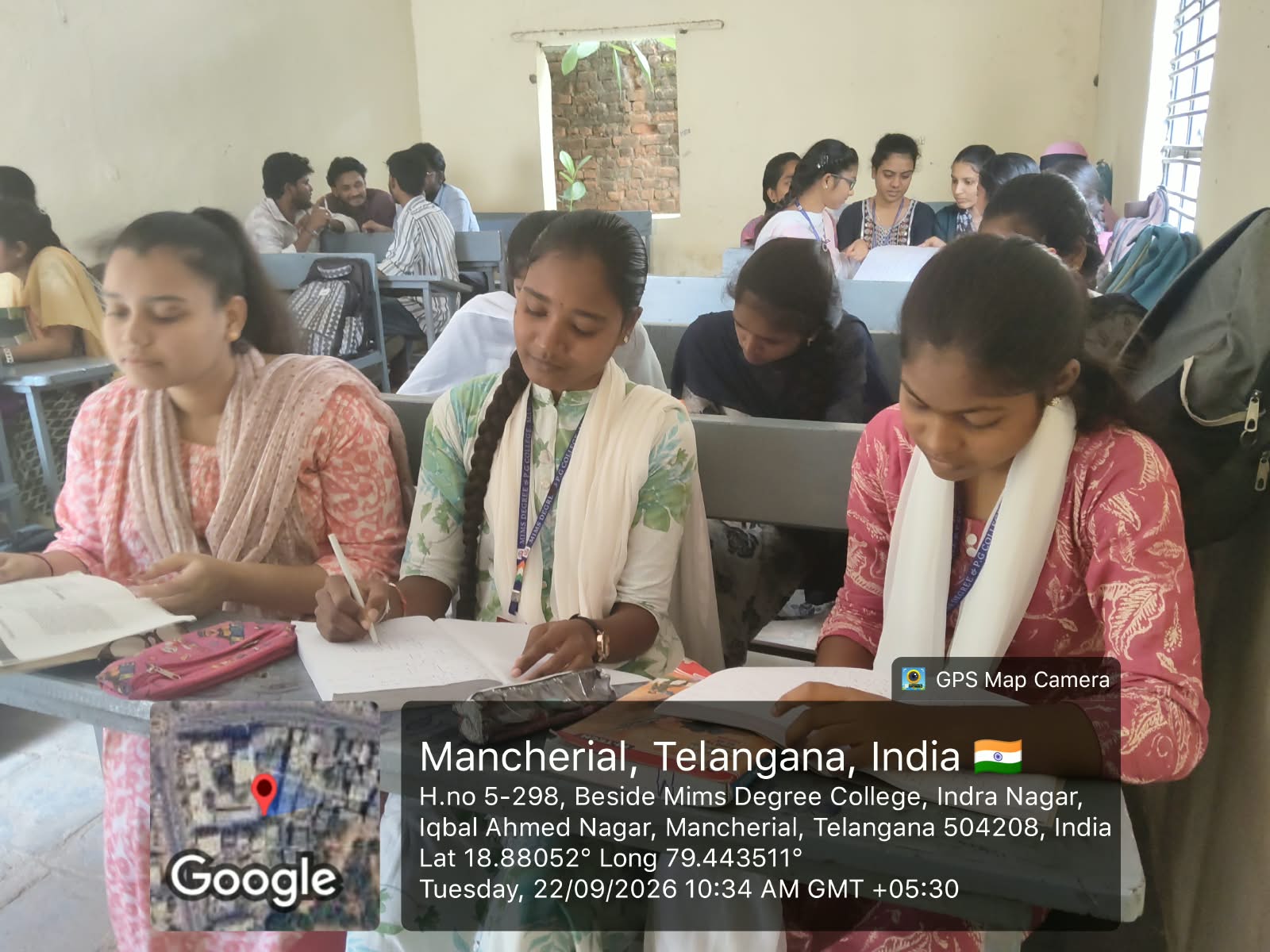
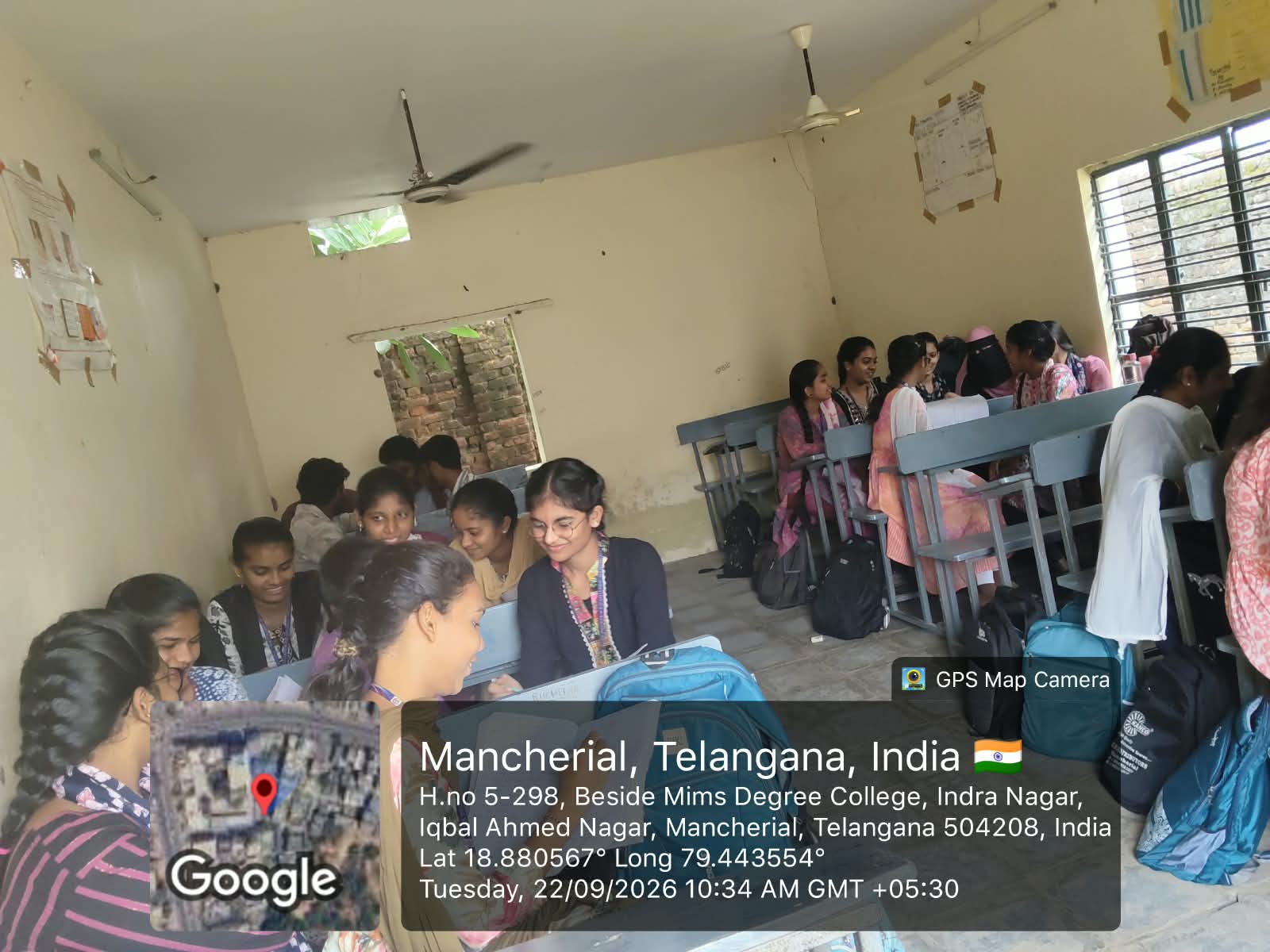
Mathematics Students Group Discussion on Importance of Linear Algebra

📅 2026-09-22

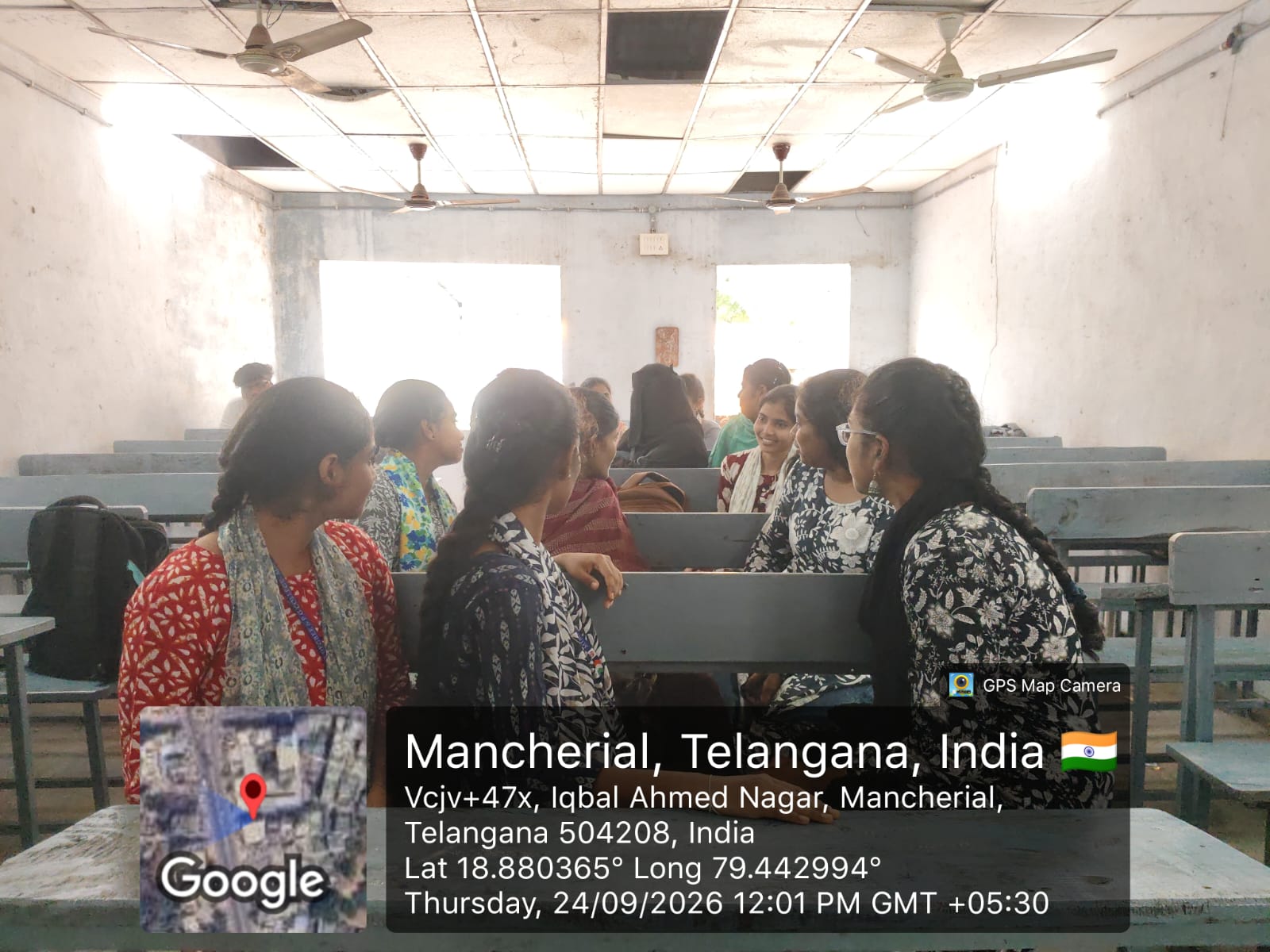
  • group discussion was conducted on the topic “Importance of Linear Algebra” to help students understand the significance of linear algebra in mathematics and its practical applications
  • Students discussed important concepts such as matrices, vectors, systems of linear equations, vector spaces, and linear transformations
  • They explored applications in computer science, engineering, economics, data analysis, and other fields
  • The activity encouraged active participation, exchange of ideas, peer learning, and mathematical reasoning

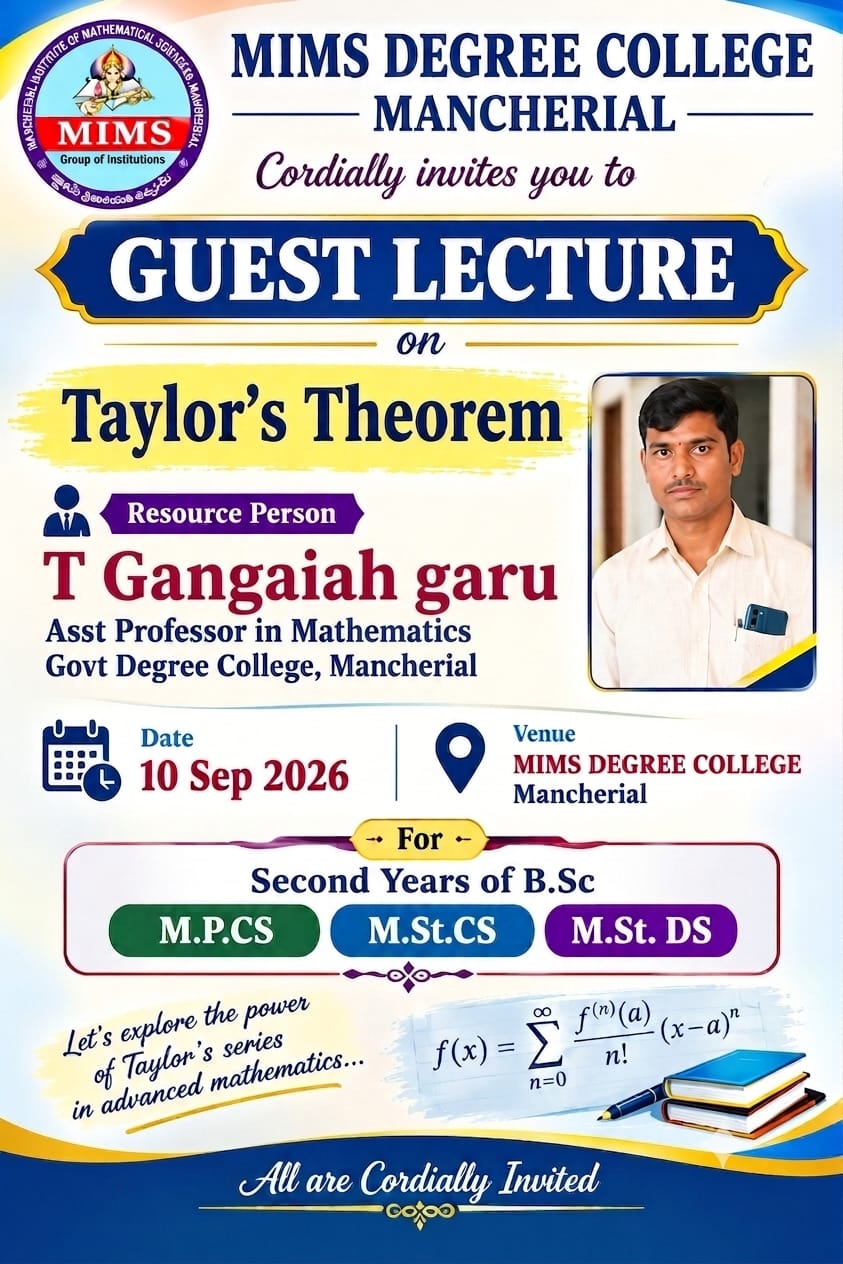
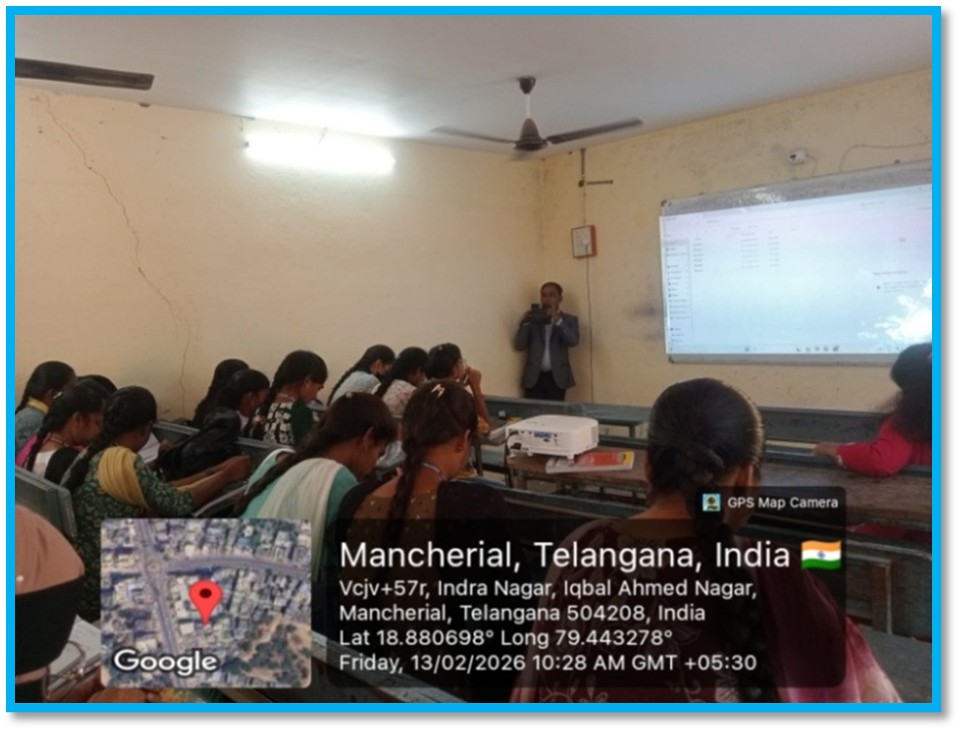
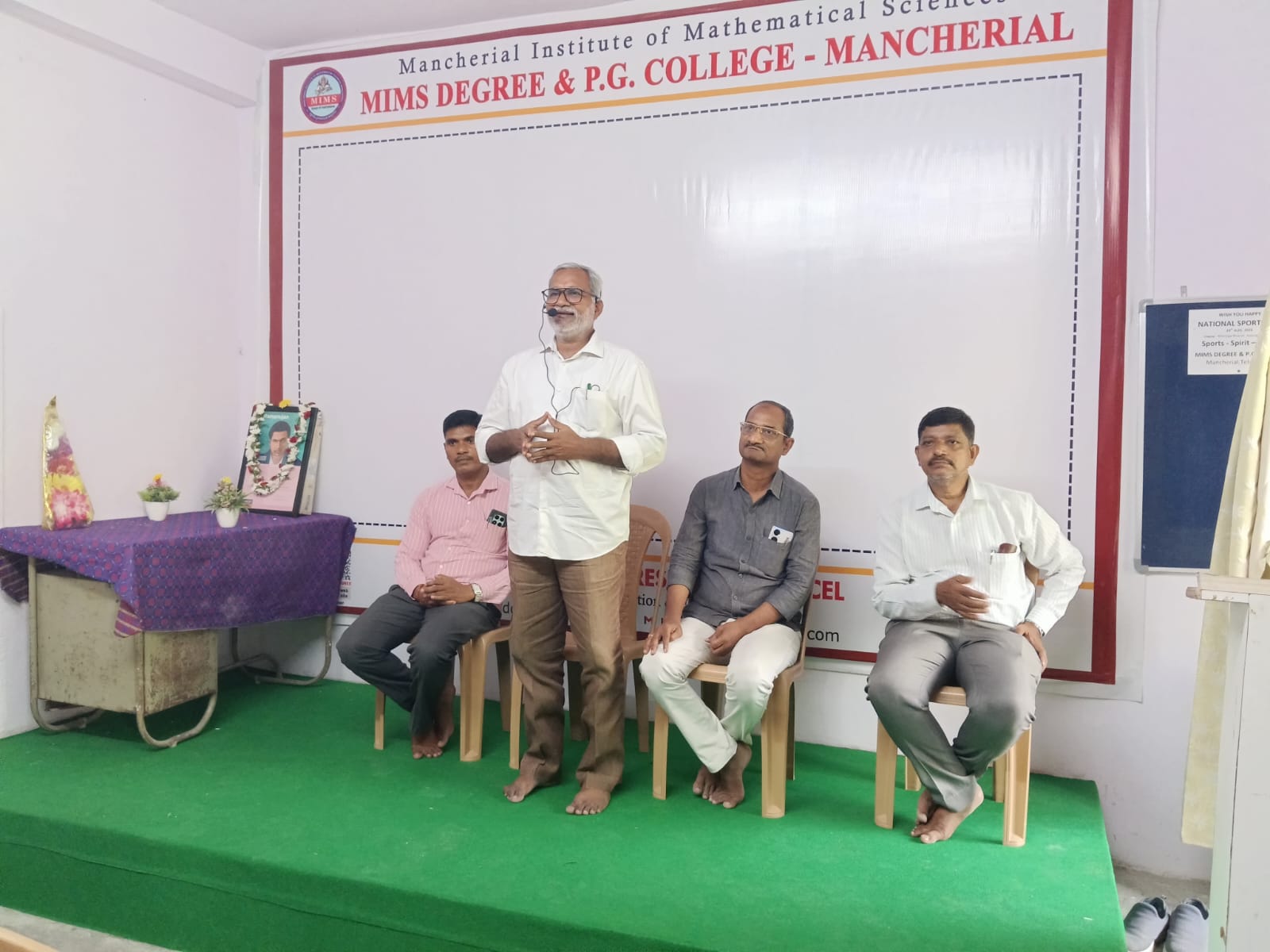
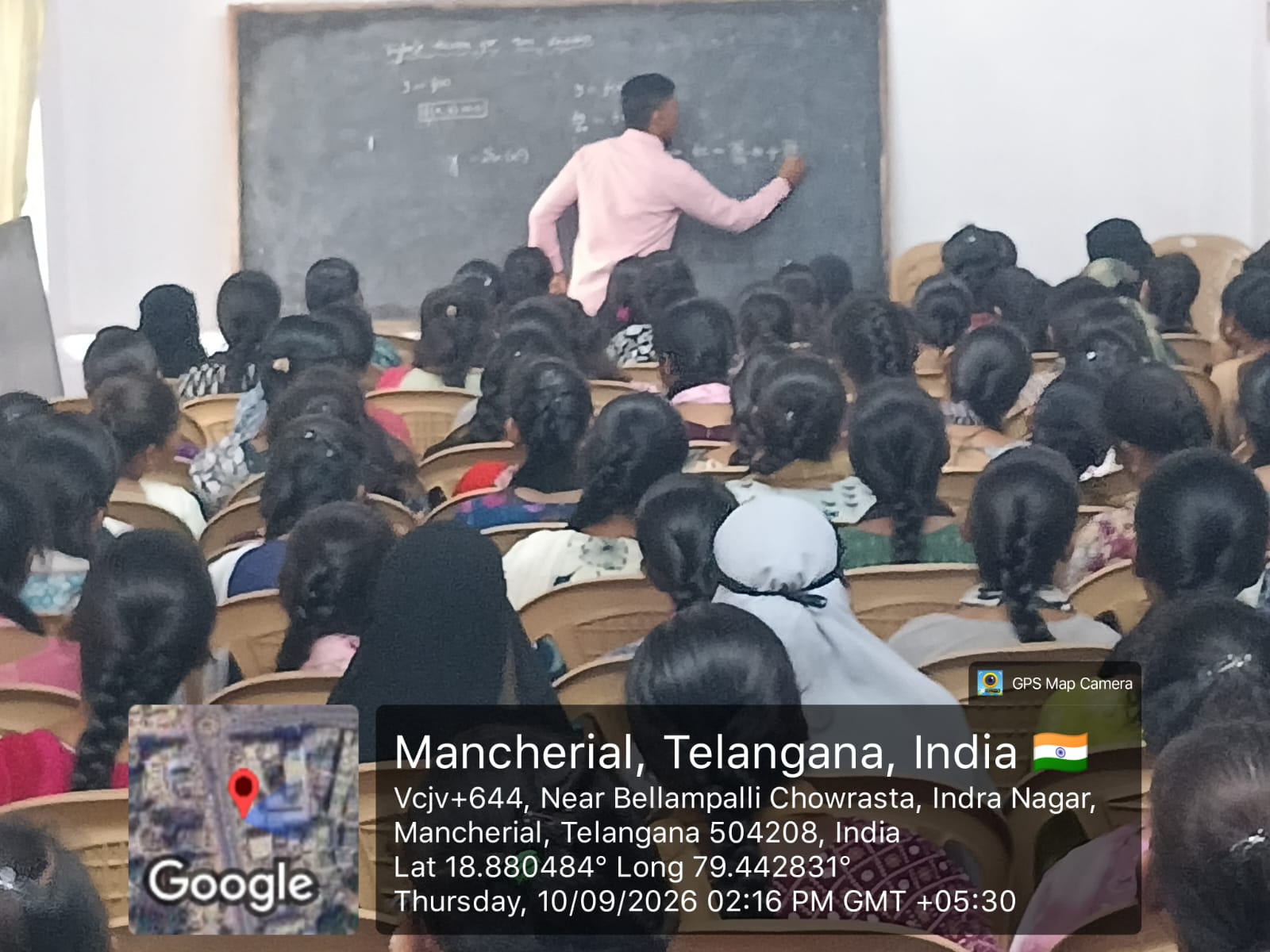
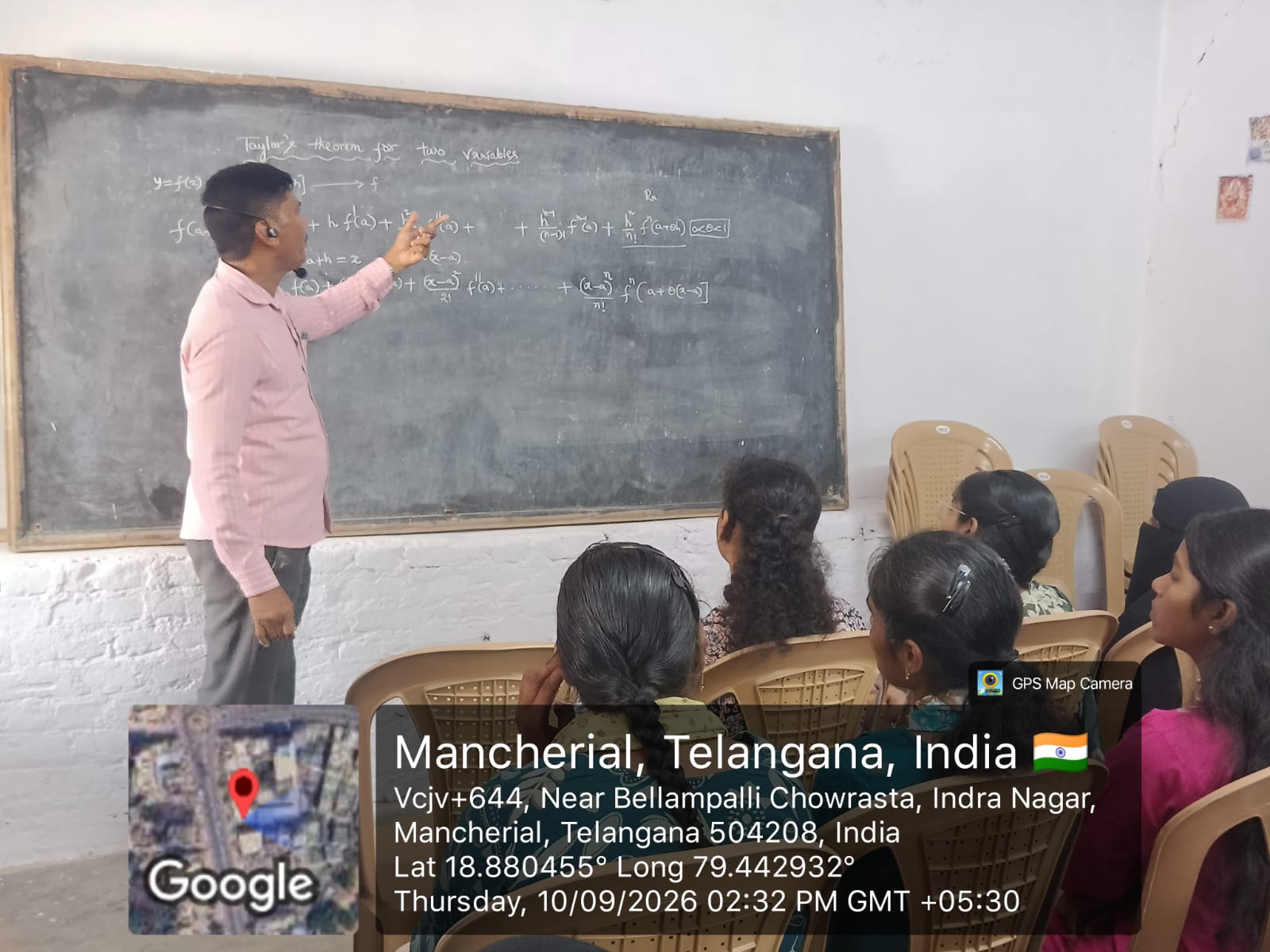
Guest Lecturer on Taylor's Theorem by Mr.T.Gangaiah garu

📅 2026-09-10

  • *Description* A guest lecture on Taylor’s Theorem was organized for http://B
  • Sc
  • students to enhance their understanding of higher mathematics
  • The resource person explained the statement, conditions, and proof of Taylor’s Theorem, along with suitable examples and step-by-step mathematical derivations
  • The lecture also highlighted the applications of Taylor’s expansion in approximating functions and solving mathematical problems
  • Students actively participated in the session and clarified their doubts through interaction with the guest lecturer

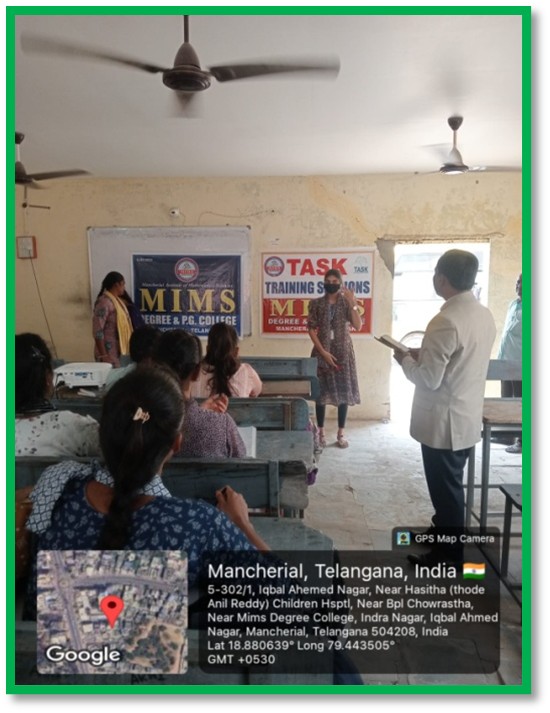
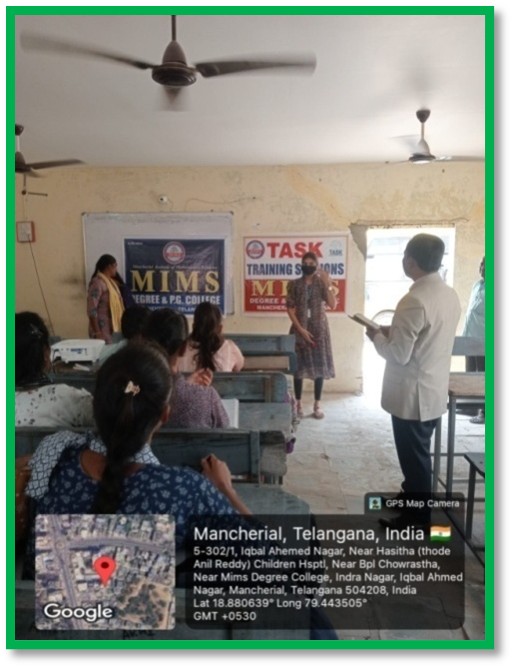
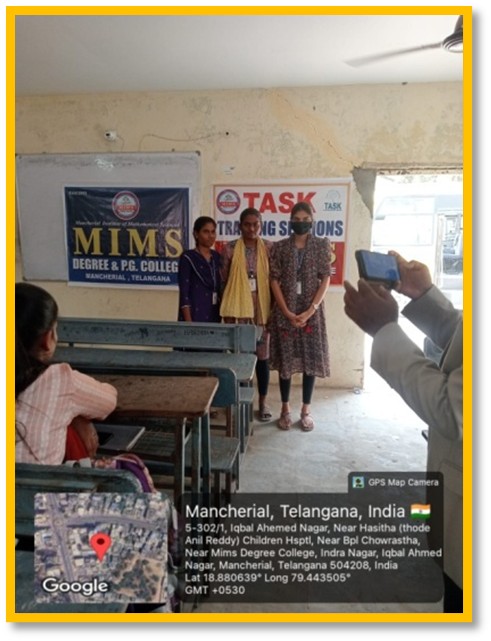
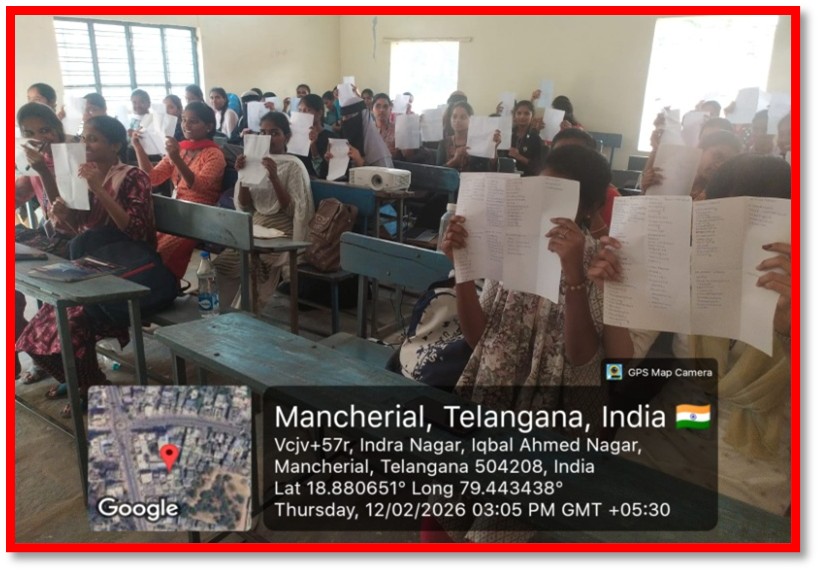
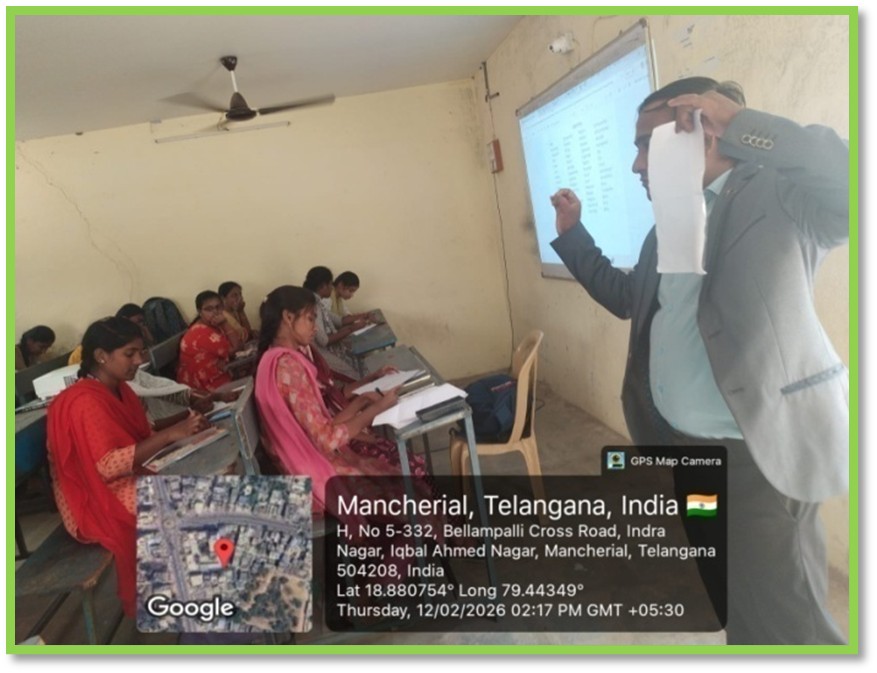
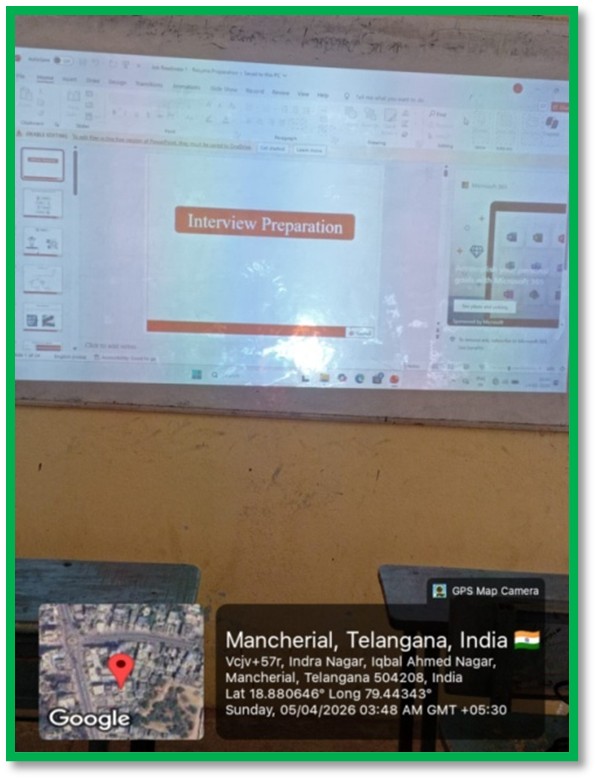
TASK Employability Enhancement Program - Mahindra Pride Class Room

📅 2026-02-12

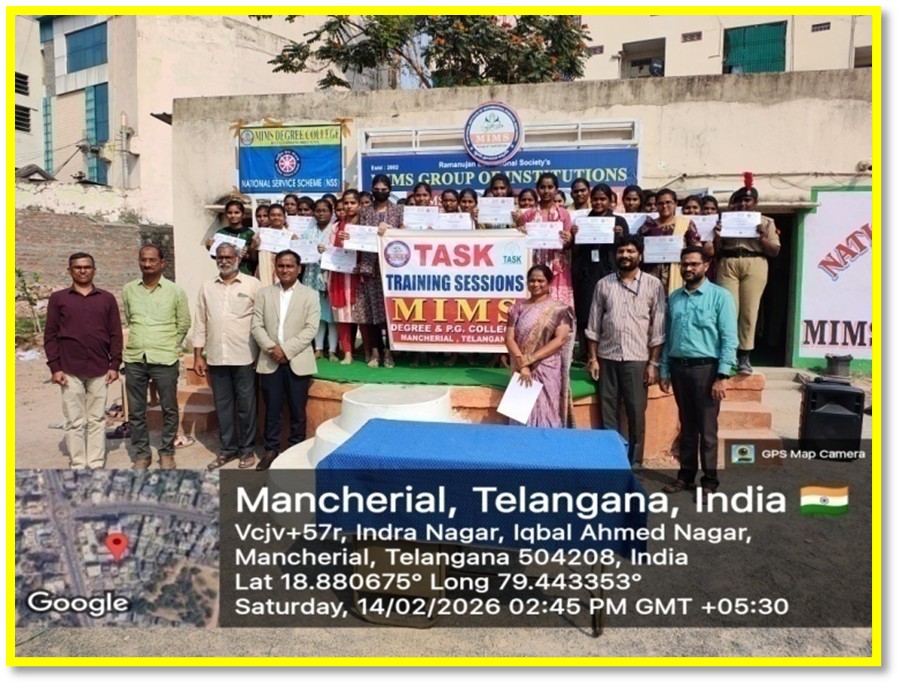
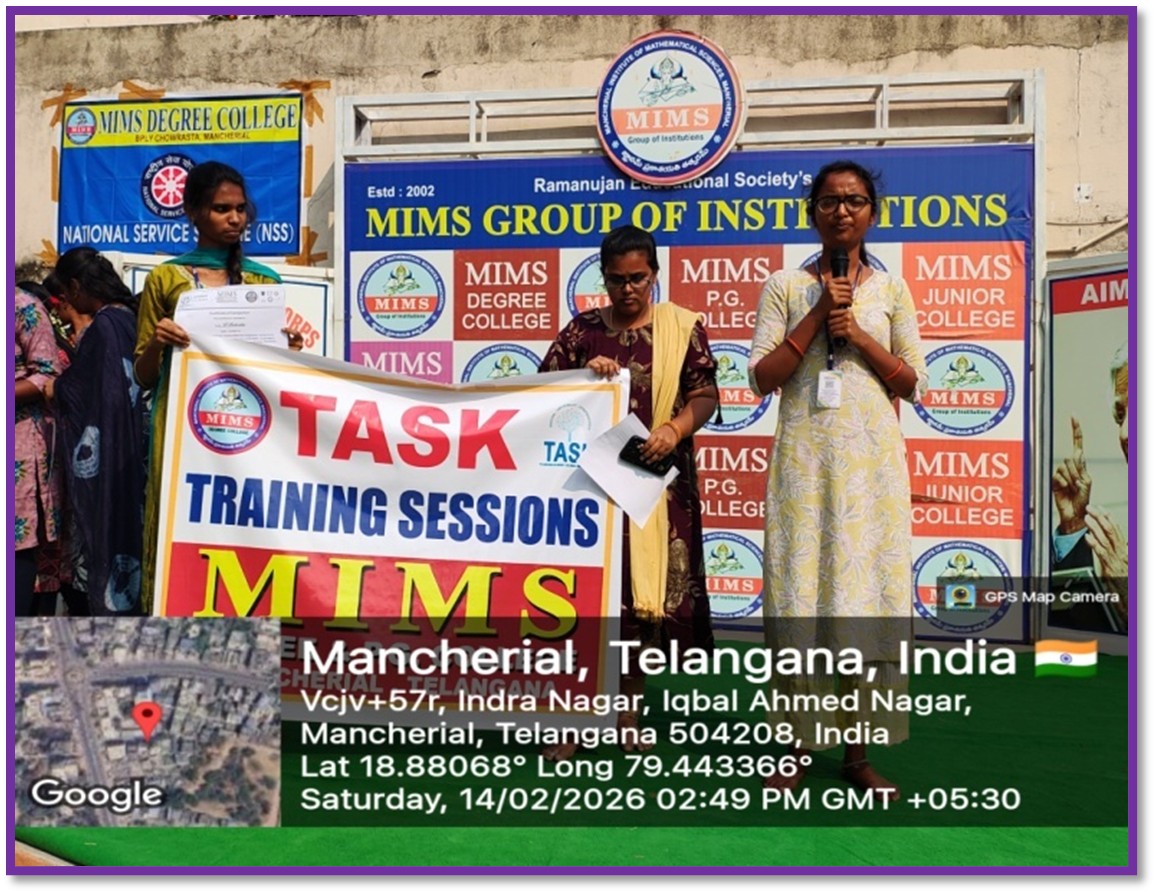
  • Day-1: Resume Preparation Importance of resume in recruitment Structure and formatting Writing career objective and skills Highlighting projects and achievements Common resume mistakes Day-2: Interview Skills Types of interviews Frequently asked questions Communication techniques Body language & professional etiquette Confidence building Day-3: Activity-Based Training Self-introduction practice Group discussion Mock interviews Interactive employability activities Trainer feedback Training Methodology Experiential learning Activity-based training Practice sessions Continuous observation Performance feedback

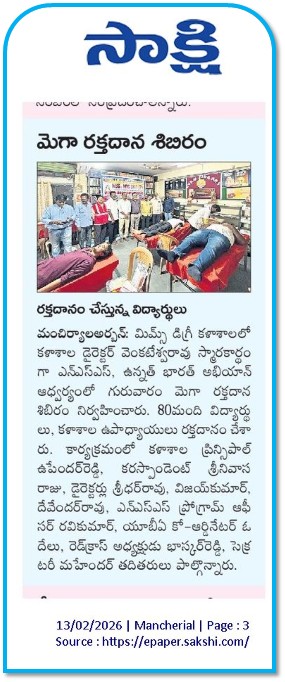
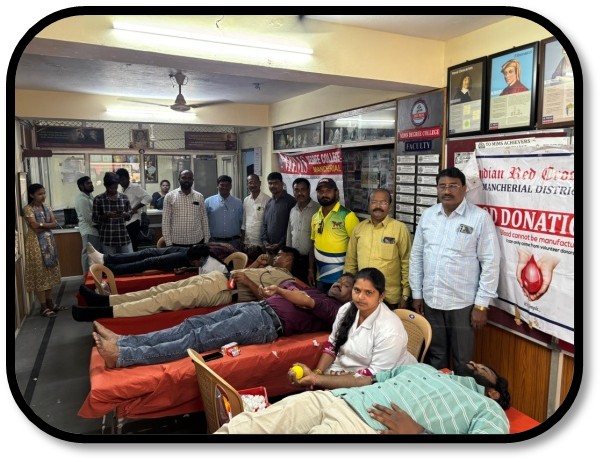
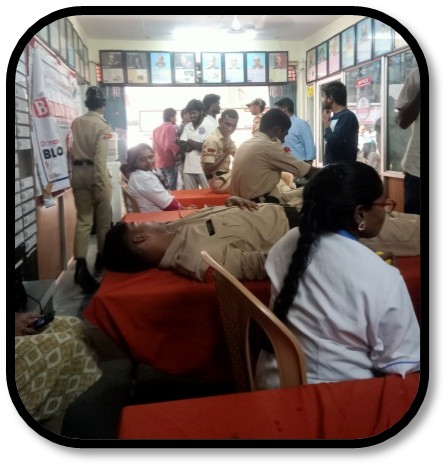
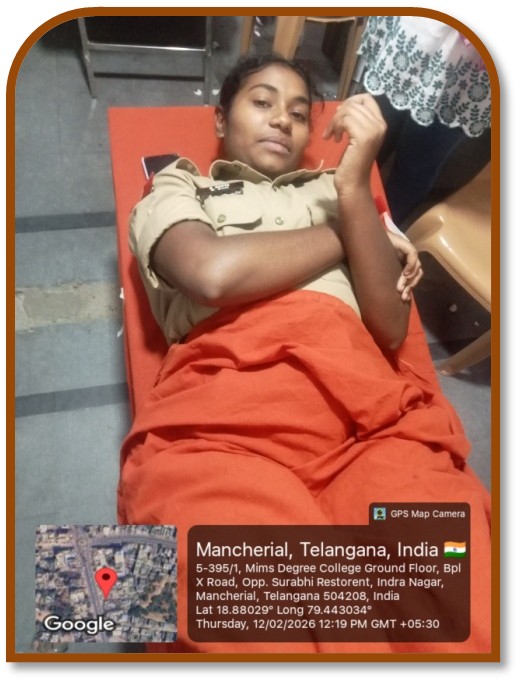
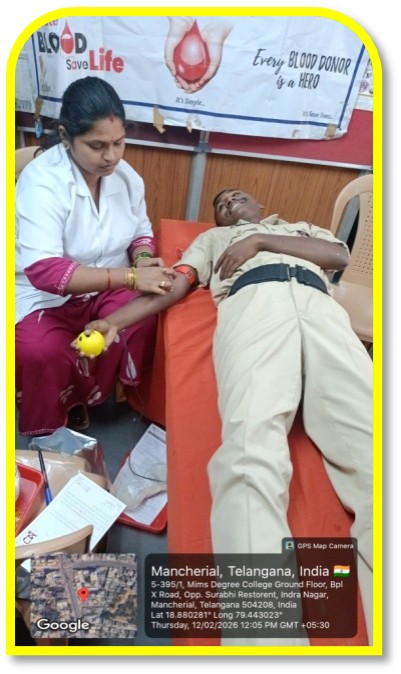
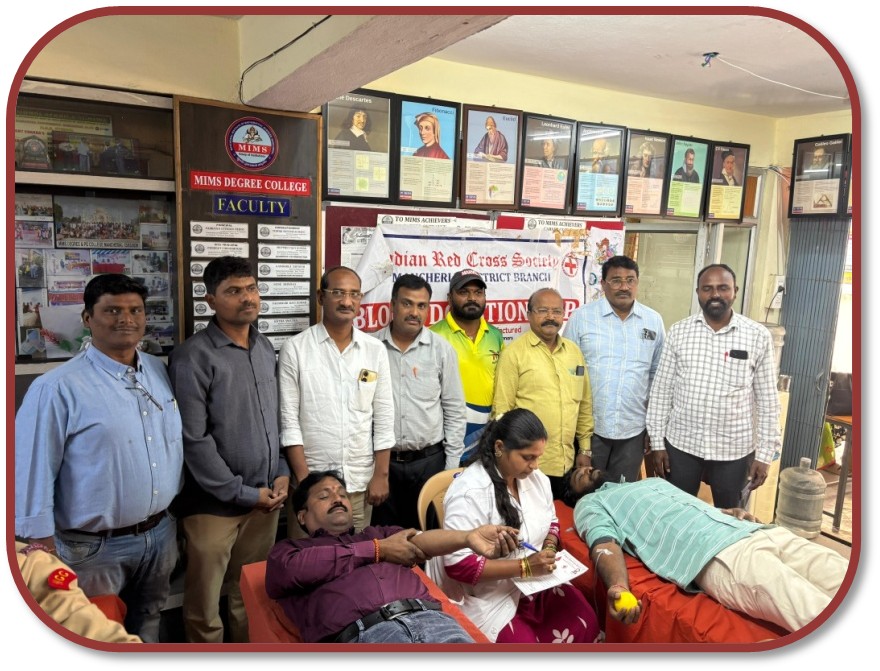
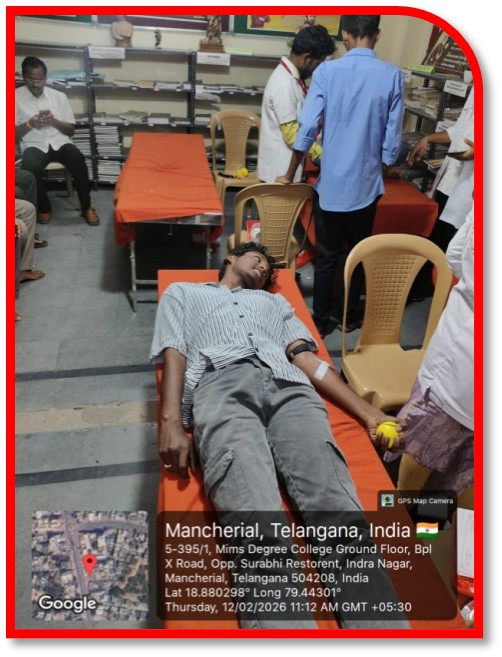
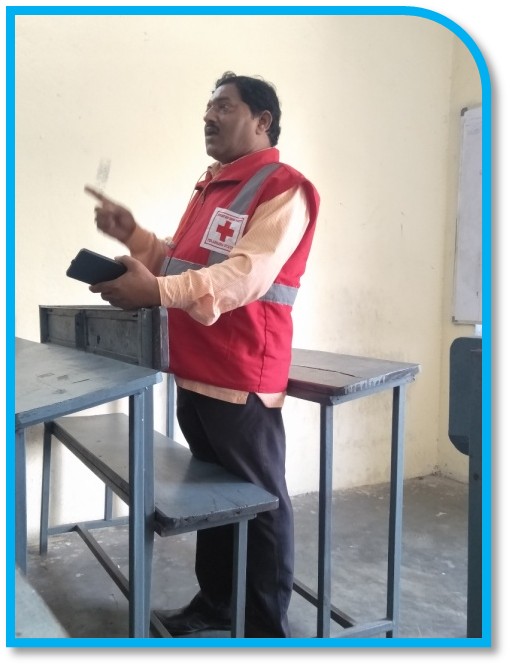
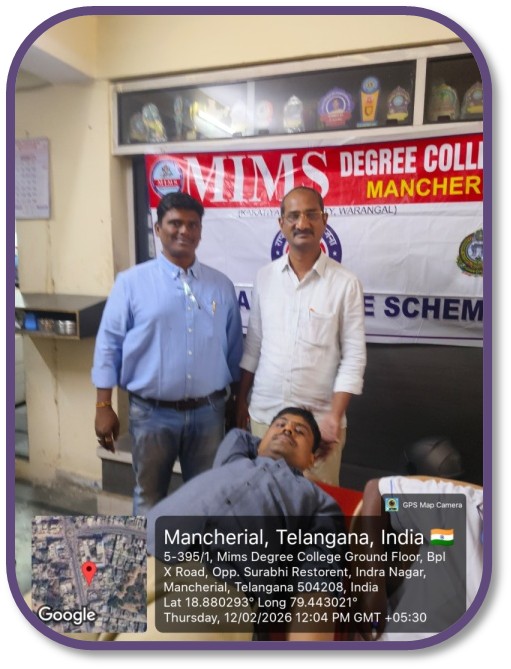
BLOOD DONATION CAMP

📅 2026-02-12

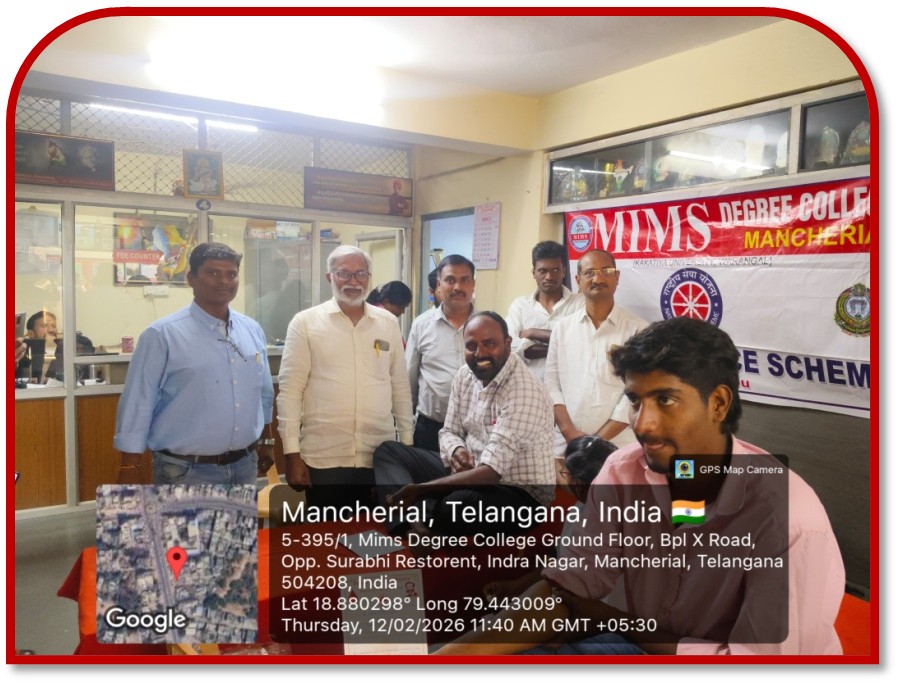
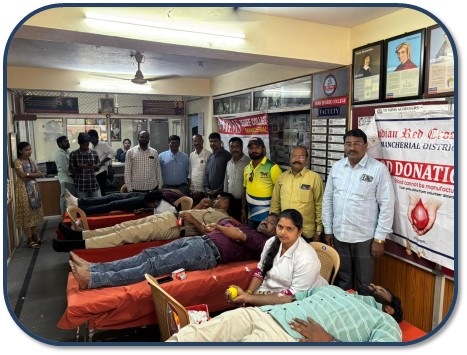
  • The Indian Red Cross medical team conducted donor screening, haemoglobin testing, and blood collection following medical protocols
  • Students, faculty members, and parents voluntarily donated blood and pledged to support emergency blood requirements in future
  • A total of 51 units of blood were successfully collected

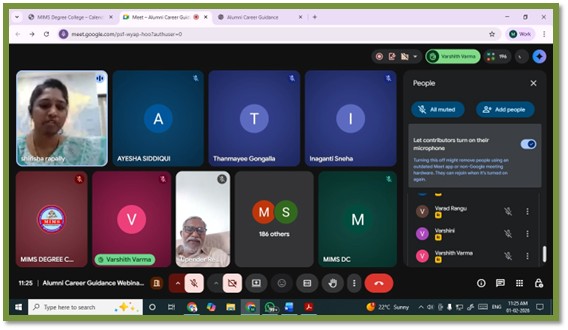
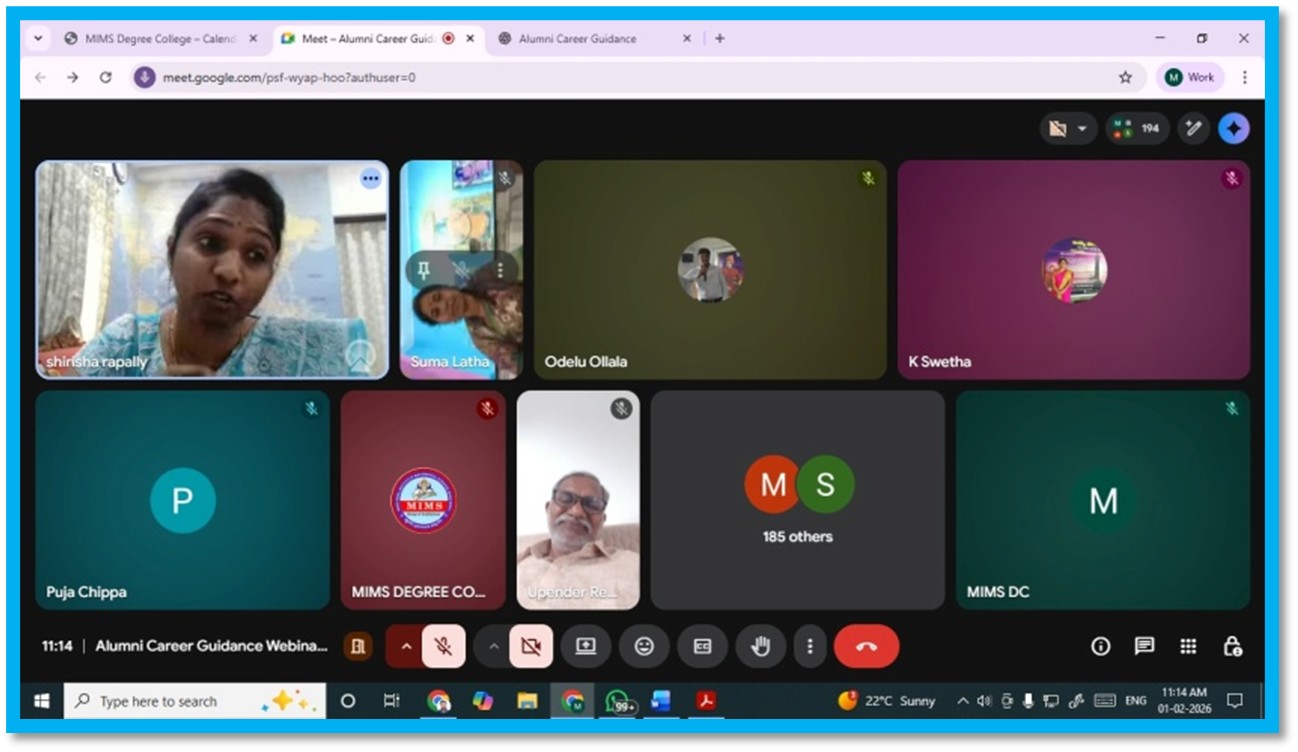
ALUMNI CAREER GUIDANCE ONLINE WEBINAR

📅 2026-02-01
  • MIMS Degree College organized an Online Alumni Career Guidance Webinar on 01 February 2026 through Google Meet
  • The session began with a formal welcome of the distinguished alumna Ms
  • Shirisha Rapally, currently serving as Divisional Accounts Officer, GHMC
  • DURING HER ADDRESS, SHE EMPHASIZED : Success is the result of disciplined preparation, not luck Importance of daily newspaper reading and current affairs Early morning study habits and continuous revision Answer writing practice for mains examinations Integrated preparation for prelims and mains Time management for degree students preparing for competitive exams She explained career opportunities in: Civil Services State Public Service Commission Banking sector Departmental recruitments Students actively interacted and clarified doubts regarding: Eligibility Book selection Preparation strategy Balancing degree and competitive exam The session ended with a formal vote of thanks
💬